True luxury in renovation is no longer announced; it’s inferred. The most cultivated homes today speak in low tones—through light, proportion, texture, and silence rather than logos, spectacle, or excess. For homeowners contemplating a significant renovation, understanding these quieter currents in design is the difference between a space that feels “updated” and one that feels perpetually current, as if it has always belonged to you.
Below are five exclusive, emerging directions shaping truly refined renovations—each less about “style” and more about how your home behaves, ages, and is experienced.
1. The Shift from Statement Rooms to Seamless Journeys
The age of the singular “showpiece room” is receding. Instead, discerning homeowners are orchestrating entire homes as continuous compositions, where transitions are as considered as focal points.
This begins with circulation. Hallways, thresholds, and stair landings are no longer treated as neutral conduits; they’re designed as quiet interludes—with curated wall sconces, a single framed piece of art, or a careful shift in flooring pattern that telegraphs arrival into a new “chapter” of the home. Sightlines are engineered: a doorway aligned perfectly to frame a garden view; a softened corner revealing an art niche rather than a raw edge; a series of layered door casings and openings that create a rhythm as you move.
Material continuity plays a central role. A single flooring material—perhaps European white oak in a muted, matte finish—can flow through principal spaces, with subtle inlays or direction changes marking functional shifts. Trims, baseboards, and ceiling details are standardized but not monotonous: perhaps one refined profile used throughout, scaled up or down depending on room volume. The goal is to avoid visual “whiplash”—no jarring jumps between themes or periods—replacing it with a calm, continuous visual narrative that makes the home feel quietly orchestrated rather than assembled.
2. Light as Architecture, Not Accessory
Lighting trends are moving far beyond the decorative pendant or fashionable chandelier. In considered renovations, light is treated as a primary architectural material—sculpting volume, emphasizing craftsmanship, and setting emotional tone.
This begins in the early planning stages, not as a late electrical plan. Window placement, sill heights, and frame dimensions are tailored to how the sun actually moves across the home. Tall, narrow windows that “cut” light into a stairwell; a low, wide window at seating height that frames greenery like a landscape painting; clerestory windows that admit light without sacrificing privacy—these elements create luminous architecture before a single fixture is installed.
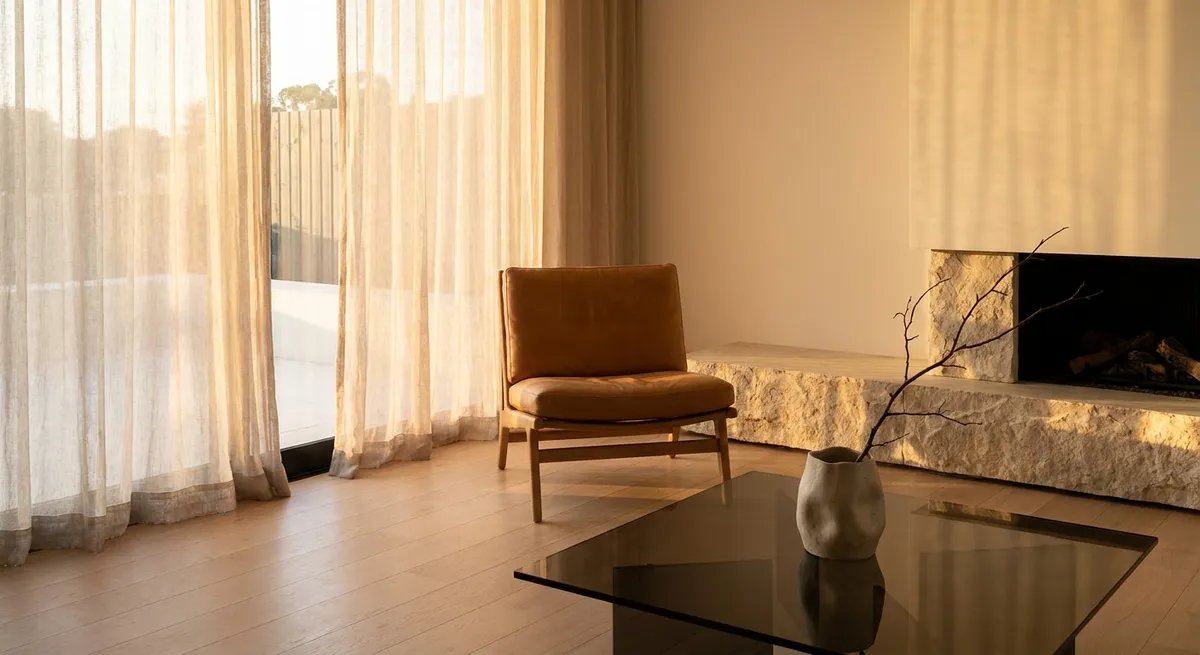
Artificial light then becomes about layers and nuance. Recessed fixtures are smaller, warmer, and thoughtfully spaced rather than blanketing ceilings. Indirect cove lighting, integrated into ceiling recesses or cabinetry, replaces harsh downlighting with a soft wash that flatters both materials and people. Wall washers highlight art and textured finishes, while ultra-discreet linear lights under floating vanities or step treads create a sense of levitation at night. Dimmable, tunable-white systems allow you to shift color temperature throughout the day, aligning lighting with circadian rhythms and moods—cooler, alert light in the morning, and warm, amber tones in the evening that make stone, wood, and fabric feel velvety and inviting.
The most refined renovations hide the technology. Drivers, transformers, and control hubs are concealed; visible fixtures are few, purposeful, and sculptural. The result is an interior that glows rather than glares, where the memory of the space is the light itself, not the light fittings.
3. Material Quietude: Elevated Neutrals with Tactile Depth
Neutrals are not retreating; they’re maturing. The most sophisticated projects today rely less on color for drama and more on the tactile and tonal interplay of natural materials. This is “material quietude”: calm at first glance, richly complex on closer inspection.
Stone, for instance, is selected not merely for veining but for how it will patina. Softer limestones, honed marbles, and brushed granites that accept wear gracefully are favored over high-polish slabs that advertise every scratch. Wood species are chosen for stable, subtle grain—riftsawn oak, ash, or walnut in oil or hardwax finishes that deepen and develop over time. Handmade tiles with slight variation, tadelakt plaster walls with tonal shifts, or microcement floors with a finely clouded finish add depth without obvious pattern.
Metal accents transition from shiny to softly luminous: brushed nickel, aged brass, and burnished bronze that appear almost matte, used sparingly on hardware, fixtures, and detailing. Upholstery leans into texture—bouclé, coarsely woven linens, and tactile blends—over bold prints. Even gloss is deployed with precision: a single lacquered surface in a pantry or library can act as a quiet counterpoint to an otherwise matte environment.
The key is restraint with intention. Rather than layering five competing materials in a single room, a cultivated renovation might limit itself to two or three per space, explored in different forms—stone as countertop, shelf, and window stool; oak as floor, millwork, and ceiling beam detail. The effect is one of composed richness, where the luxury is discovered through touch and proximity, not saturation.
4. Purposeful Tech Integration Disguised as Simplicity
Technology is omnipresent, but in the most elevated homes, it’s nearly invisible. Instead of putting screens and devices on display, they’re woven discreetly into architectural and joinery decisions so that the home reads as timeless, even while it performs at a high level.
This starts by deciding what should not be seen. Televisions recess into millwork and disappear behind sliding panels or artwork. Speakers are ceiling-flush or integrated into walls and cabinetry. Charging drawers, appliance garages, and hidden workstations swallow cords and clutter. Smart thermostats, sensors, and security devices are coordinated in finish and placement, aligned with switch plates and trim so they recede into the background.
Control systems emphasize intuitive, minimal interfaces over gadgetry. A single row of carefully labeled keypads replaces walls crowded with switches. Scenes—“Evening,” “Entertain,” “Away”—are pre-programmed to adjust lighting, shading, and climate in response to how you actually live, not how a showroom imagines you live. The sophistication lies in the choreography, not in the hardware on view.
Behind the walls, infrastructure is future-ready: ample conduit runs for later upgrades, centralized low-voltage hubs, and thoughtful router and access point placement for strong, consistent connectivity without visible hardware. The payoff is a home that feels almost analog at first glance—calm, uncluttered, tactile—while quietly deploying complex systems to support comfort, energy efficiency, and security.
5. Sanctuaries Within: Micro-Retreats Crafted for Daily Restoration
A defining trend among discerning renovators is the creation of “micro-retreats”—intentionally carved-out pockets of calm designed for highly specific rituals. Rather than a single, generalized “relaxation area,” these are precision-crafted spaces dedicated to the ways you actually restore yourself.
This may be a reading cove nested into a bay window, with a custom cushion, integrated bookshelf, and dedicated warm reading light. Or a “landing lounge” at the top of a staircase—a slender bench, a sculptural lamp, and a single piece of art—serving as a pause between public and private realms. In primary suites, bathing areas evolve into curated immersion zones: deep soaking tubs framed by soft indirect lighting, warm floors underfoot, and a small niche for a book, candle, or carafe of water. The emphasis is on sensory experience—sound absorption, warmth, texture, scent—rather than display.
Even workspaces follow this logic. Instead of open desks facing circulation paths, small, acoustically softened study nooks are tucked behind pocket doors or within custom millwork, allowing deep focus without visual noise. Outdoor micro-retreats continue the theme: a single built-in bench under a pergola, a small courtyard visible from the kitchen, or a private balcony furnished not as an entertainment zone but as a quiet chair-plus-side-table vignette.
These sanctuaries are never accidental; they are drawn and detailed like primary rooms, with just as much attention given to light, sightline, and proportion. In a world of constant exposure, this quiet architecture of retreat may be the most luxurious trend of all.
Conclusion
The emerging language of refined renovation is not about spectacle; it is about orchestration. Homes that feel truly elevated now are those where journeys are seamless, light is composed, materials whisper rather than shout, technology retreats into the background, and intimate spaces for restoration are treated as non-negotiable.
For homeowners planning a renovation, aligning with these trends is less about chasing fashion and more about adopting a philosophy: prioritize how a space feels over how it photographs, honor natural materials and light, and insist that every decision—seen or unseen—contributes to an environment that is calm, coherent, and quietly exceptional. The result is a home that will not simply look current this year, but will age with the kind of grace that defines true, enduring luxury.
Sources
- [American Institute of Architects (AIA) – Home Design Trends Survey](https://www.aia.org/resources/6312941-home-design-trends-survey) - Industry survey highlighting shifting residential priorities, including seamless spaces and wellness-focused design
- [Harvard Joint Center for Housing Studies – Improving America’s Housing](https://www.jchs.harvard.edu/research-areas/reports/improving-americas-housing-2023) - Research on renovation patterns, homeowner priorities, and investment in high-quality upgrades
- [U.S. Department of Energy – Energy Saver: Lighting Choices to Save Money](https://www.energy.gov/energysaver/lighting-choices-save-electricity) - Guidance on layered, efficient lighting strategies and the benefits of advanced controls
- [Well Living Lab – Research on Indoor Environments](https://welllivinglab.com/research/) - Evidence-based insights on how lighting, materials, and layout impact comfort and well-being
- [Massachusetts Institute of Technology (MIT) – Design and Computation Group](https://architecture.mit.edu/subject/4s06) - Academic perspective on integrating technology and architecture in ways that preserve spatial integrity
Key Takeaway
The most important thing to remember from this article is that this information can change how you think about Design Trends.