In the most considered homes, design has shifted from spectacle to subtlety. The new luxury is not louder, larger, or more ostentatious—it is quieter, smarter, and deeply attuned to how you actually live. At Renovate Quotient, we see a clear movement away from renovation as a single “big reveal” and toward homes that feel composed, enduring, and personally resonant.
For homeowners on the cusp of a renovation, the question is no longer “What’s trending?” but rather “What will still feel impeccably right in ten years?” The following design currents—and the five exclusive insights woven through them—speak to that future‑facing, renovation‑literate mindset.
The Soft Architecture of Space: Shaping Rooms Without Walls
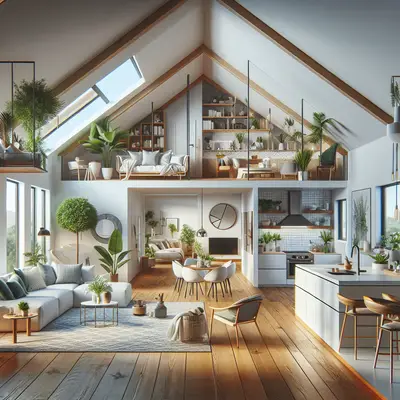
The most sophisticated renovations now rely less on hard partitions and more on “soft architecture”—millwork, lighting, thresholds, and level changes—to suggest zones, guide movement, and frame views.
Instead of carving open plans into obvious “areas,” designers are using ceiling coffers, dropped beams, or subtle shifts in floor material to suggest where the dining experience begins and the lounge experience ends. A continuous stone plinth can visually connect a kitchen and living room, while a change in rug texture or direction of wood grain quietly marks a transition without ever closing the space.
Soft architecture also allows you to future‑proof your home. Built‑in benches along windows can evolve from reading nooks to workspaces; a deep threshold with flanking bookshelves can read as both passage and library. Lighting is a critical player here: layered schemes with dimmable circuits, wall washers, and accent spots give a single room multiple personalities, from family hub to evening salon.
Exclusive Insight #1: Design the “movement” of your renovation before the furniture.
Work with your architect or designer to map how you want to move through your home at different times of day. Once circulation, sightlines, and thresholds are choreographed, the decisions about furniture and finishes become sharper, more restrained, and far more elevated.
Material Intelligence: Pairing Honest Surfaces With Precise Restraint
Refined homes today are not defined by how many materials they use, but by how purposefully they use them. The most compelling interiors tend to limit themselves to a disciplined palette—three or four key materials, expressed in variations of finish, scale, and detail.
Natural stone is being handled with greater nuance: honed rather than polished, with thicker edges reserved for focal moments and slender profiles for secondary surfaces. Wood is often left with a matte or oiled finish that celebrates grain rather than obscuring it, and metals are shifting toward warmer, softer patinas—brushed nickel, burnished brass, aged bronze—rather than high‑shine chrome.
There is also a growing emphasis on tactility. Woven grasscloth wallcovering in a quiet corridor, fluted timber around an island, or subtly ribbed tile in a guest bath provide depth and interest without resorting to loud pattern. The result is a home that feels rich to the hand as much as to the eye.
Exclusive Insight #2: Choose one “noble” material and let others support it.
Whether it’s a particular stone, a specific wood species, or a favored metal, allow one material to carry the narrative across rooms—reappearing in different ways at varying scales—while the rest of the palette steps back. This creates a sense of continuity that reads as custom and deeply intentional.
The Discreet Technology Layer: Invisible, Intuitive, Integrated
In elevated renovations, technology is increasingly treated like lighting: essential, but never the main event. The most coveted homes conceal their tech rather than celebrate it, integrating it seamlessly into joinery, architecture, and daily rituals.
Wall‑mounted screens are recessed into bespoke cabinetry or framed like art; speakers disappear into ceilings or are integrated into millwork; motorized shades vanish into pockets. Smart home systems are being pared back into intuitive, unified interfaces rather than an array of conflicting apps and switches. The ambition is not to show how connected the home is, but to make that connectivity almost unnoticeable.
Attention is also shifting toward long‑term adaptability. Conduits, access panels, and flexible wiring routes are being designed in from the beginning so that future upgrades can occur without demolition. This “infrastructure thinking” is a hallmark of genuinely premium renovation work.
Exclusive Insight #3: Separate “tech infrastructure” from “tech devices” in your planning.
When you brief your renovation team, distinguish between the permanent backbone (conduits, wiring, hidden equipment spaces, ventilation paths) and the devices that will inevitably change. Investing in the backbone—and keeping devices easily swappable—means your home will feel current far longer with minimal disruption.
Restorative Rooms: Designing for Cognitive Calm, Not Just Visual Beauty
An elevated home now does more than look refined; it actively supports mental clarity and recovery. Renovations are increasingly shaped by principles borrowed from environmental psychology and wellness design, but translated with restraint and sophistication rather than spa clichés.
Daylight is treated as a primary material. Window heights, sill depths, and reveal details are all tuned to admit generous light while managing glare. Where possible, sightlines are anchored by natural elements—a courtyard tree, a distant canopy, a sliver of sky above a neighboring roofline. Interior color palettes are quietly desaturated, allowing the eye to rest rather than compete with visual noise.
Acoustics are handled with equal seriousness: upholstered wall panels disguised as millwork, acoustic underlay beneath hard floors, and fabric window treatments that double as sound softening. Even the placement of doors, bathrooms, and circulation paths is calibrated to keep private zones genuinely quiet and restorative.
Exclusive Insight #4: Identify one room to be your “visual breathing space” and protect it.
During the design process, nominate a single room—often a bedroom, reading room, or study—to be deliberately under‑designed. Fewer patterns, softer contrast, restrained decoration. Make it the space where your eye and mind can fully exhale. The rest of the home can carry more statement; this room should carry your calm.
Curated Permanence: Built‑In Character Instead of Disposable Décor
The most compelling renovations today are moving away from fast‑changing décor and toward elements that feel anchored, almost architectural in their character. Instead of relying on accessories to provide personality, design teams are building “curated permanence” into the bones of the home.
Think of integrated bookcases with tailored lighting, niche shelves that frame a single sculpture, or a built‑in window seat whose cushion fabric is chosen with the same care as a sofa. Kitchens incorporate display ledges within otherwise minimal cabinetry to host a rotating but limited collection of objects, art, or heirloom vessels. Powder rooms become exquisitely detailed jewelry boxes, with considered mirrors, trim, and hardware that feel custom rather than catalog.
This approach slows down the visual tempo of the home. Rather than constant seasonal overhauls, you make occasional, meaningful changes within a composed framework. The result is a space that feels both deeply personal and refreshingly unhurried.
Exclusive Insight #5: Decide what you want your home to “collect” over time—and design for it.
Are you a collector of books, art, ceramics, or travel objects? Instead of leaving this to chance, design purpose‑built moments—ledges, vitrines, asymmetric shelving, or framed wall segments—that anticipate and honor that collection. When your architecture expects your life, the home feels innately, luxuriously yours.
Conclusion
Design trends at the elevated end of the market are not about novelty; they are about refinement—of space, of material, of experience, of time. The homes that age best are those in which every decision, from the placement of a doorway to the finish of a hinge, is made with both present satisfaction and future grace in mind.
As you plan your renovation, think less in terms of “styles” and more in terms of frameworks: soft architecture to shape how you move, material intelligence to govern what you touch, discreet technology to future‑proof how you live, restorative planning to protect your calm, and curated permanence to express who you are. Within these frameworks, trends become less fleeting and more like quiet, enduring signatures of a life well considered—and beautifully housed.
Sources
- [American Institute of Architects – Home Design Trends Survey](https://www.aia.org/resources/18366-home-design-trends-survey) – Insights into emerging architectural and residential design priorities
- [Harvard Joint Center for Housing Studies – Improving America’s Housing](https://www.jchs.harvard.edu/research-areas/remodeling) – Research on renovation patterns, homeowner behavior, and long‑term housing trends
- [Mayo Clinic – Light and Your Health](https://www.mayoclinic.org/healthy-lifestyle/adult-health/expert-answers/seasonal-affective-disorder/faq-20057899) – Discussion of daylight’s impact on mood and well‑being, relevant to restorative design
- [U.S. Department of Energy – Residential Lighting](https://www.energy.gov/energysaver/lighting-choices-save-you-money) – Technical guidance on layered lighting strategies and energy‑efficient choices
- [MIT School of Architecture + Planning – Design and Environment](https://sap.mit.edu/research/design-environment) – Research perspectives on how environmental design influences human experience and comfort
Key Takeaway
The most important thing to remember from this article is that this information can change how you think about Design Trends.