Renovation at the highest level is no longer about chasing trends; it is about anticipating quiet shifts before they become obvious. Discerning homeowners are increasingly drawn to spaces that feel composed rather than decorated—rooms that age gracefully, operate intelligently, and reveal their sophistication only upon closer inspection. The most interesting design currents today live in that tension between innovation and restraint, where luxury is measured not by excess, but by intention.
Below are five emerging, quietly transformative insights shaping refined renovations—each one less about style for its own sake and more about how a home behaves across years, routines, and seasons.
Insight 1: The Almost-Invisible Smart Home
The new pinnacle of “smart” is nearly unnoticeable. Instead of visible tech trophies mounted on walls, leading projects integrate technology as a silent infrastructure. Lighting scenes that respond to natural daylight, climate systems that learn occupancy patterns, and discreet, centralized control panels are replacing the clutter of disparate devices and blinking hubs.
In premium renovations, this begins with planning the wiring, networking, and control systems as early as structural layouts—long before finishes are chosen. Millwork is designed to conceal speakers, routers, and charging stations. Screens recede into cabinetry or double as mirrors. The result is a home that feels serenely analog on the surface, while a sophisticated digital ecosystem runs quietly underneath. For homeowners, the payoff is a space that is simpler to live in and easier to future-proof: updates happen in software, not in drywall.
Insight 2: Material Pairings That Age on Purpose
A nuanced renovation now looks beyond first-year perfection and considers how surfaces will patina over a decade. Instead of fighting every mark, designers are curating material pairings that age in compatible, intentional ways. Honed stone, limewash, oiled woods, and unlacquered metals develop a shared visual narrative over time, rather than aging at different “speeds.”
Thoughtful pairings might include brushed nickel with cool-toned limestone, or burnished brass with warm oak and plaster. The aim is not rusticity but cultivated softness—finishes chosen less for a showroom sheen and more for how they respond to light, touch, and wear. For homeowners, this approach shifts the conversation from maintenance anxiety to material literacy: understanding which surfaces will gently evolve and where to deploy more resilient, low-maintenance options in high-traffic zones. A renovation conceived this way looks less “new” and more “inevitable,” as if it always belonged to the home.
Insight 3: Zoned Luxury, Not Room-by-Room Opulence
A significant shift is occurring away from uniformly upgrading every room to the same high finish level. Instead, astute renovators are concentrating their investment into a few deliberately choreographed “zones of experience” and allowing adjacent areas to remain quieter, simpler, and more utilitarian.
This might mean treating a primary suite as a holistic micro-retreat—bedroom, dressing area, and bath conceived as one continuous experience—while nearby secondary bedrooms remain thoughtfully modest. A kitchen may be planned as a social hub with heroic storage, integrated ventilation, and impeccable lighting, while the back pantry, laundry, and service corridors are executed beautifully but understatedly. This zoning of luxury does two things: it contains budget without compromising quality where it matters most, and it creates spatial rhythm—the psychological pleasure of moving between heightened and calm moments within the same home.
Insight 4: Light as a Structural Element, Not Just an Accessory
In elevated renovations, lighting is no longer an afterthought layered onto a finished plan; it is treated with the same seriousness as walls and doors. Natural and artificial light are choreographed together to shape how a home feels at 6 a.m., 2 p.m., and 10 p.m. rather than simply hitting code requirements.
This can look like rethinking window placements to balance glare and privacy, carving light wells or internal windows to pull daylight into deep floorplates, and using indirect lighting—coves, wall washes, and integrated fixtures in joinery—to create depth and softness after dark. Color temperature is calibrated by zone: warmer in restorative spaces, slightly cooler and brighter in task-driven areas. The most refined schemes also consider how light reveals texture: a plaster wall, a ribbed stone backsplash, or a fluted cabinet front gains dimension under grazing light. By approaching illumination as architecture rather than decoration, homeowners achieve spaces that feel composed at any hour, not just beautifully photographed at noon.
Insight 5: Personalized Quiet Corners in a Social Floorplan
Open, social floorplans remain desirable, but the most thoughtful renovations now counterbalance expansive gathering spaces with precisely defined, deeply personal “quiet corners.” These are not leftover nooks; they are deliberately crafted micro-environments designed around specific rituals: reading, journaling, stretching, late-evening work, or simply watching the light move across the room.
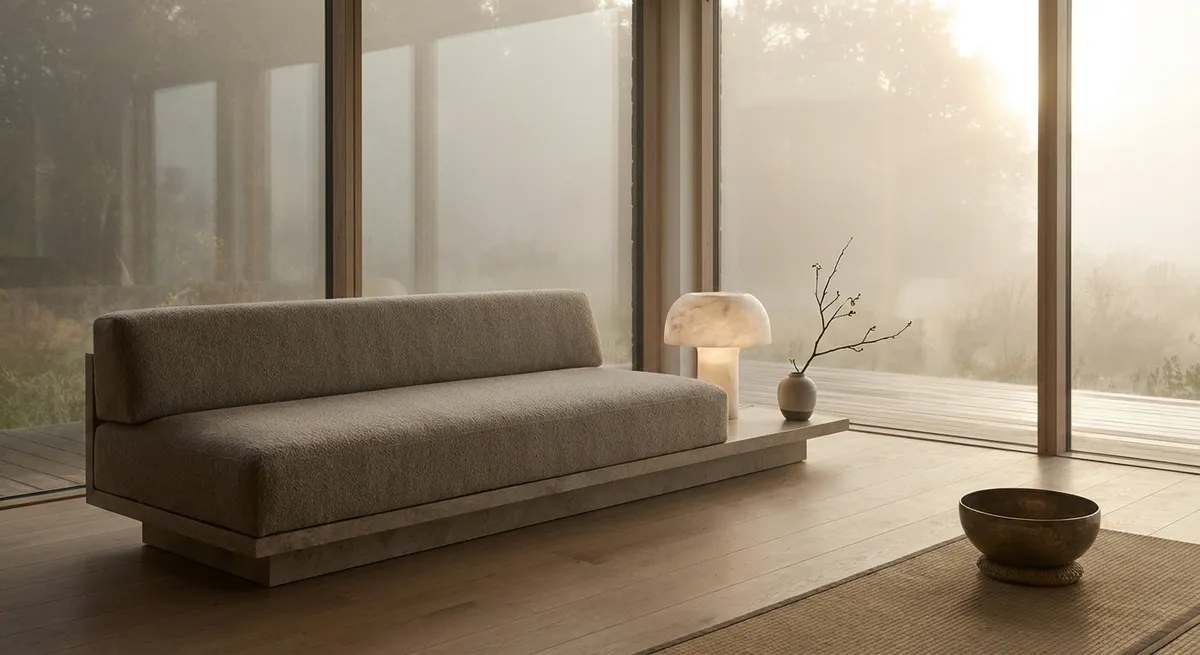
A quiet corner might be a window seat wrapped in cabinetry, a small alcove off the main hall with tailored lighting and a single remarkable chair, or a compact study carved out through clever reconfiguration rather than added square footage. Acoustics, sightlines, and proximity to natural light are weighed as carefully as in larger rooms. The elegance lies in the duality: the home can host generously, yet also contract into intimate, calming moments for its occupants. For homeowners, these spaces often become the most cherished outcome of a renovation—less photographed, but most lived in.
Conclusion
Refined renovation today is not a race toward the latest look; it is the quiet alignment of technology, materials, light, and layout to support a life well-lived. The most enduring projects are those that anticipate how a home should adapt—gracefully, almost imperceptibly—as habits change and years pass. By prioritizing invisible intelligence, intentional aging, zoned luxury, architectural lighting, and intimately scaled quiet spaces, homeowners move beyond surface upgrades into a more considered, long-horizon transformation.
In an era of constant visual noise, the true luxury is a home that does not shout for attention, but rewards it.
Sources
- [American Institute of Architects (AIA) – Home Design Trends Survey](https://www.aia.org/resources/6415012-home-design-trends-survey) - Insight into emerging residential design priorities, including technology and spatial organization
- [Harvard Joint Center for Housing Studies – Improving America’s Housing](https://www.jchs.harvard.edu/research-areas/remodeling) - Research on renovation patterns, investments, and homeowner behavior
- [U.S. Department of Energy – Energy Saver: Lighting Choices](https://www.energy.gov/energysaver/lighting-choices-save-you-money) - Guidance on lighting types, efficiency, and quality, relevant to architectural lighting planning
- [Royal Institute of British Architects (RIBA) – House and Home Design Guides](https://www.architecture.com/explore-architecture/housing) - Professional perspectives on residential layouts, light, and spatial quality
- [MIT School of Architecture + Planning – Design and Computation Research](https://sap.mit.edu/research/design-computation) - Exploration of integrated technology and design, informing future-ready, discreet smart home strategies
Key Takeaway
The most important thing to remember from this article is that this information can change how you think about Design Trends.