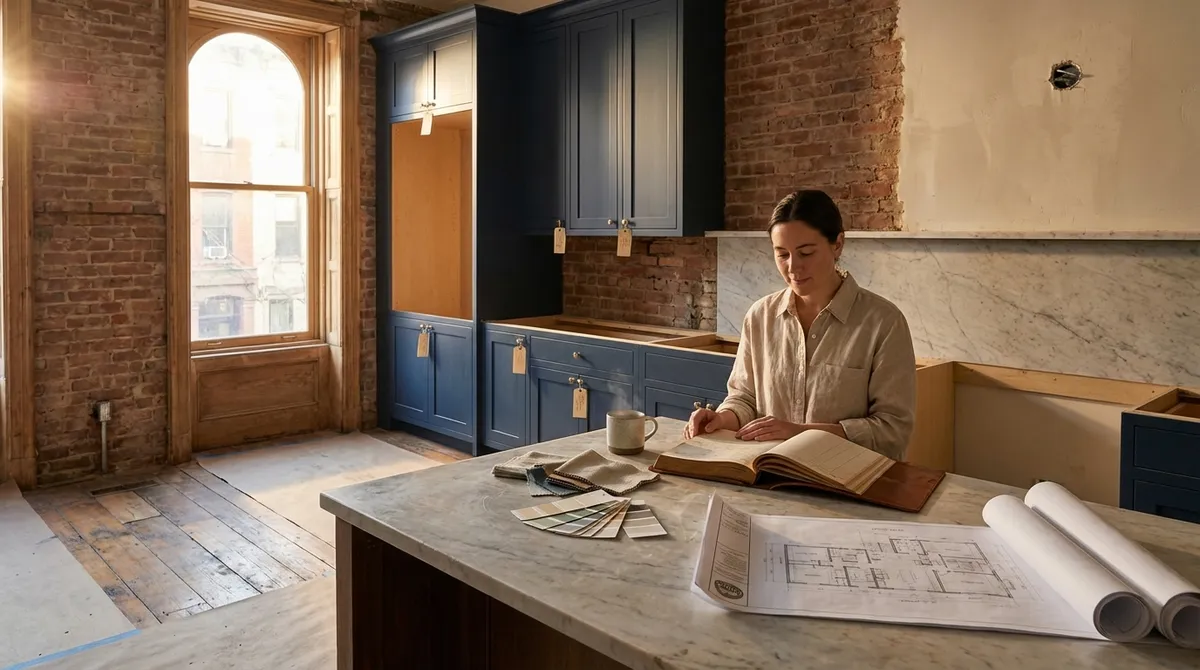
In the most successful renovations, the budget never becomes the story. It is the quiet authority in the background—discreetly orchestrating decisions, containing ambition without diluting impact. For homeowners who care as much about nuance as square footage, budget management is less about restriction and more about curation: choosing where to be emphatic, where to be restrained, and where to remain invisible.
This article explores a refined approach to renovation budgeting, with five exclusive insights tailored to homeowners who want their financial strategy to be as considered as their design vision.
Reframing the Budget as a Design Instrument
When handled thoughtfully, a renovation budget does not sit apart from design; it shapes it. Instead of starting with a list of “must-haves,” begin with a hierarchy of experiences: how you want the home to feel in motion, at rest, during gatherings, and in solitude. From there, cost becomes a filter, not a constraint.
This shift allows you to pair investment with impact. For example, a meticulously crafted entry sequence—lighting, flooring, sightlines—often has more effect on perceived luxury than an over-designed guest bedroom that is rarely used. By anchoring every financial decision to a specific sensory or functional outcome, you avoid diffuse spending that looks impressive on paper but feels underwhelming in person.
In practice, this means attaching line items to emotional or functional returns: “easier mornings,” “quieter evenings,” “welcoming arrival,” rather than simply “new vanity,” “built-ins,” or “wall removal.” The budget becomes a living design dossier—where aesthetic priorities and financial realities refine each other until they are coherent.
Insight 1: The “Critical Path” Line Items You Never Cut
Most homeowners know not to skimp on structure or waterproofing. The more refined budget, however, protects an additional tier of items: systems and details that are almost invisible but set the tone for the entire home. These often include:
- Electrical layout and lighting control that accommodate layered lighting (ambient, task, accent) rather than a grid of ceiling cans.
- Acoustic insulation and door quality in key zones (bedrooms, home office, media room), which dramatically change how calm the home feels.
- HVAC zoning and ventilation that manage comfort, humidity, and air quality—crucial in open-plan spaces and spa-like baths.
These elements rarely become Instagram content, yet they dictate how “expensive” a home feels in daily use. A sophisticated budget ring-fences them early, insulating them from later compromises. When trade-offs inevitably arrive, they come from more easily replaced or visibly “swappable” items—faucet finishes, decorative fixtures, or non-architectural furniture—rather than from the foundation of the experience.
Insight 2: Designing for Fewer, Better Transitions
Most budget conversations cluster around rooms—kitchen, primary suite, bath upgrades. The refined renovation budget, however, privileges transitions: thresholds, corridors, changes in level, and the places where one material yields to another. This is where modest investments create disproportionate elegance.
Thoughtful transitions allow you to reduce the number of “hero moments” you pay for. Instead of every room needing a statement, a cohesive sequence of subtle, consistent transitions makes the entire home read as harmonious. Consider:
- Investing in a single, continuous flooring material across main living spaces to reduce visual fragmentation—and extra transitions, trims, and labor.
- Allocating budget to carefully detailed thresholds (flush transitions between tile and wood, recessed tracks, hidden door hardware) that signal quality from the ground up.
- Refining your paint strategy, with restrained color shifts or tactful sheen changes that quietly articulate zones without constructing new walls.
This approach often lowers complexity and contingency risk: fewer distinct materials, fewer custom conditions, and fewer opportunities for errors mean a calmer budget and a calmer home.
Insight 3: Shadow Budgets for Time, Disruption, and Fatigue
A premium renovation is not only a financial exercise; it is a test of endurance—for you, your household, and your routines. The sophisticated homeowner acknowledges three parallel “shadow budgets”:
- Time Budget – How many weeks of disruption can you tolerate before decision fatigue begins to erode the quality of your choices? Longer timelines increase the risk of rushed, last-second approvals just to move things along.
Disruption Budget – How much temporary inconvenience (loss of kitchen, alternate sleeping arrangements, noise) can you reasonably absorb without sacrificing work, family harmony, or health?
3. Attention Budget – How many decisions can you make thoughtfully? Even design enthusiasts have a finite capacity before they default to whatever is easiest, which is rarely best.
Building these shadow budgets into your financial plan is both strategic and humane. For example, you might allocate extra funds to a short-term rental or phased sequencing so that critical decisions—like millwork design or final fixture selections—are not made under peak stress. In doing so, you are preserving the integrity of both your project and your life, rather than subsidizing the schedule with your sanity.
Insight 4: Treating Contingency as a Curated Reserve, Not a Guess
Many renovation budgets nod to contingency with an arbitrary percentage (10–20%) tacked on at the end. A more nuanced approach treats contingency as a curated reserve portfolio—allocated based on where surprises are most likely and what you would actually want the option to upgrade or correct.
Begin by assigning tailored contingency tiers:
- High-contingency zones: older kitchens and baths (behind-walls conditions), structural changes, exterior envelope work.
- Medium-contingency zones: areas where measurements, supplier lead times, or approvals may impose last-minute substitutions (custom millwork, specialty tile, built-in appliances).
- Low-contingency zones: simple finish changes with little technical risk (paint-only rooms, straightforward flooring swaps).
Next, identify intentional “optional upgrades”—such as stone slab thickness, integrated lighting in cabinetry, or motorized shading—that you will only greenlight if the early phases stay on or under budget. This transforms contingency from a vague cushion into a strategic reserve. You are not merely bracing for bad surprises; you are also funding the possibility of elegant last-minute “yes” decisions where they matter most.
Insight 5: Quietly Engineering Future Flexibility
One of the most sophisticated budget moves is investing in latent potential—work that may not be fully visible now but preserves graceful options later, without the cost of major demolition. This is especially valuable for homeowners who anticipate life changes but do not wish to overbuild today.
Examples of quiet, future-oriented investments include:
- Running additional electrical and low-voltage lines to walls where you may later add integrated shelving, art lighting, or a concealed workstation.
- Structurally preparing for a future opening (between kitchen and dining, or primary suite and adjacent room) by installing concealed headers now, even if you keep the wall intact for the moment.
- Roughing in plumbing or drainage behind a closet or niche where a powder room, bar, or secondary laundry might one day live.
These moves are substantially more affordable during the current renovation than as standalone projects in five years. They also protect against the all-too-common regret of having to undo fresh work. From a budget perspective, you essentially purchase “future optionality” at a discount—and with far less upheaval.
Conclusion
A refined renovation budget is neither austere nor indulgent; it is composed. It elevates the invisible, finances calm as much as beauty, and privileges coherence over spectacle. By protecting critical-path line items, designing for transitions instead of isolated rooms, honoring your shadow budgets, structuring contingency as a curated reserve, and quietly engineering future flexibility, you create a project that stands up not only to aesthetic scrutiny, but to time, use, and evolving priorities.
In the end, the most luxurious outcome may be this: a renovation that feels effortlessly right, where the budget did its work so discreetly that it never needed to be discussed at all.
Sources
- U.S. Department of Housing and Urban Development – Rehab A Home - Overview of renovation-related considerations and financing from a federal housing perspective
- Federal Trade Commission – Home Repair and Renovation Basics - Guidance on contracts, change orders, and protecting yourself financially during home projects
- Harvard Joint Center for Housing Studies – Improving America’s Housing - Research and data on remodeling trends, costs, and homeowner investment behavior
- National Association of Home Builders – Cost of Construction Survey - Insight into how construction and renovation budgets are typically allocated across categories
- This Old House – How to Create a Home Renovation Budget - Practical framework and examples for structuring renovation budgets and contingencies
Key Takeaway
The most important thing to remember from this article is that this information can change how you think about Budget Management.