Renovation, at its most considered, is less about spectacle and more about calibration—of light, proportion, material, and mood. The most compelling homes emerging today are not shouting for attention; they are quietly choreographed to support how their owners think, work, host, and restore. For homeowners contemplating a renovation, understanding the deeper currents beneath surface-level “trends” is the difference between a home that feels dated in three years and one that ages with deliberate grace.
Below are five exclusive, forward-leaning design insights shaping sophisticated renovations now—each one a lens you can use to refine decisions, steward your investment, and create a home of enduring relevance.
Insight 1: Intentional Volume — Sculpting Space, Not Just Square Footage
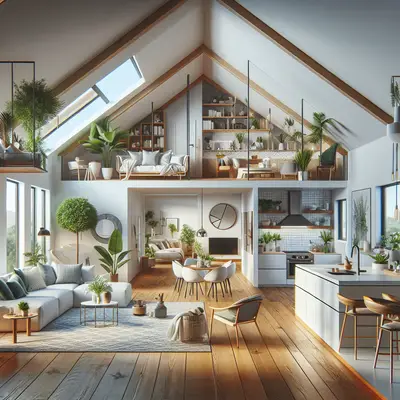
The most elevated renovations are moving beyond the obsession with square footage and turning, instead, to the nuance of volume—ceiling height, sectional perspectives, and framed views that choreograph how a room feels as you move through it.
Raising a ceiling by even a modest amount in a key area—the entry, the primary living space, or over a stair—can have more impact than adding an entire room. Likewise, pairing one heightened volume with adjacent, slightly lower, more cocooned spaces introduces contrast and drama without visual noise. Think: a generous, light-washed kitchen-dining volume, flanked by a lower, library-like sitting room wrapped in warmer finishes.
Sophisticated renovators are using architectural “pauses” such as threshold transitions, soffits, or lightly dropped ceiling planes to signal functional shifts—cooking to dining, public to private, work to rest—while maintaining an overall sense of openness. Skilful placement of internal windows, cut-outs, and open shelves between spaces can visually connect rooms yet modulate views, giving air and light without sacrificing privacy.
The refinement lies not just in achieving openness but in editing it. By sculpting different volumes for different moods, your renovation becomes less an open floor plan and more a considered spatial sequence.
Insight 2: Material Quietude — Layering Fewer, Better Surfaces
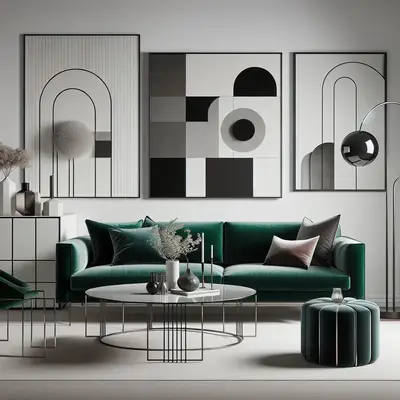
In premium renovations, the visual language of surfaces is shifting from “more and busier” to “fewer and deeper.” Rather than an explosion of feature walls and mixed finishes, the most timeless spaces now rely on a restrained material palette, expressed with precision.
Homeowners are choosing one or two primary materials per space—say, a honed limestone and a warm oak—and then exploring subtle variations: different formats, joint patterns, or edge details. This allows spaces to feel rich but not chaotic. A single stone species used on floors, countertops, and a fireplace surround, each treated differently (brushed, honed, fluted) can have more sophistication than three competing stones.
Texture is becoming as important as color. Soft-matte paints, plaster-like finishes, linen drapery, and lightly wire-brushed woods diffuse light and minimize glare, creating calm, camera-ready surfaces that read beautifully both in person and on social media. Reflective finishes are deployed strategically—mirrored backs of shelving, a polished metal detail at a threshold, a lacquered cabinet front—to catch and amplify light rather than dominate a room.
The emerging rule of thumb: reduce the palette, refine the details. It’s the difference between a home that feels assembled and one that feels composed.
Insight 3: Performance-Driven Kitchens — From Showpiece to Working Atelier
Kitchens remain the heart of renovation investment, but their design logic is evolving from “show kitchen” to “culinary atelier”—spaces that are as technically capable as they are visually serene.
Behind the integrated fronts and gallery-like islands, serious planning is underway: dedicated landing zones for small appliances, hidden charging drawers, breakfast or coffee niches behind pocket doors, and scullery-style secondary prep areas where the “mess” of hosting can recede from view. For homeowners who entertain, a secondary sink and dishwasher—tucked behind a discreet door or around a corner—can transform how a home performs during gatherings.
Appliance integration is becoming more architectural: column refrigeration aligned with millwork reveals, induction cooktops that disappear into stone, and venting solutions concealed in ceiling planes or custom surrounds. The visual result is quieter, but the technical performance is elevated through improved ventilation, task-specific lighting, and durable surfaces able to handle real cooking.
Ergonomics is also under sharper scrutiny. Drawer-based storage (instead of deep base cabinets), pull-out pantries, and narrowed island widths for comfortable reach all signal a new kind of luxury: a kitchen that exhausts decision fatigue, not its users. The most refined kitchens today read as serene social spaces, yet operate like discreet, professional-grade workrooms.
Insight 4: Adaptive Rooms — Designing for Fluid, Multi-Generational Living
A growing hallmark of sophisticated renovation is designing rooms that can adapt gracefully to different life stages and patterns of use, without feeling like compromise spaces. Rather than dedicating square footage to single-purpose rooms that sit idle, homeowners are commissioning “elastic” rooms that change roles over a day, a week, or a decade.
An office with concealed millwork that hides monitors and equipment can effortlessly serve as a reading room or an intimate cocktail space after hours. A guest room with a finely detailed wall bed or integrated daybed can double as a yoga studio or creative studio, rather than languishing unused between visits. Sliding panels, pivot doors, and built-in storage walls are being used to reframe spaces on demand—expanding or containing them as needed.
Multi-generational considerations are quietly shaping renovations as well: slightly wider doorways, curbless showers, blocking in walls for future grab bars, and first-floor flex rooms that can evolve from office to future guest or caregiver suite. These features are subtle yet profoundly strategic, protecting both daily comfort and long-term resale value.
Adaptive design is not about making a room “do everything.” It’s about creating clear primary identities for spaces, then layering in invisible capacity for them to do something else exceptionally well when life inevitably changes.
Insight 5: Light as a Design Instrument — Beyond Fixtures and Into Atmosphere
In elevated renovations, lighting is no longer treated as a final layer of decorative fixtures but as a primary architectural tool shaping mood, function, and perception of quality.
Rather than relying on uniform grids of downlights, thoughtfully renovated homes are embracing layered lighting: low-glare ambient lighting to set an overall tone; precise task lighting at counters, desks, and reading chairs; and accent lighting that grazes walls, highlights art, or flanks key architectural elements. Cove lighting, integrated shelf lighting, and concealed linear LEDs are being deployed to make interiors feel quietly luminous rather than conspicuously lit.
Color temperature and dimming strategy are becoming critical. Warmer, adjustable-white lighting tuned to different times of day supports both visual comfort and circadian health. In social spaces, the ability to shift from brighter, cooler light for daytime productivity to warmer, dimmer light in the evening transforms a room’s personality without changing any furniture.
Exterior and transitional lighting—entry paths, terraces, balconies—are increasingly integrated into the lighting plan, extending the perceived boundary of the home after dark and enhancing both security and ambience. The most sophisticated renovations treat light as a narrative: it guides you, settles you, and subtly signals how a space is meant to be used at any given moment.
Conclusion
The most compelling renovations today are guided less by decorative novelty and more by disciplined intention. They privilege volume over mere area, restrained materiality over constant contrast, performance-driven kitchens over showpieces, adaptive rooms over rigid programming, and atmospheric lighting over harsh uniformity.
For homeowners on the cusp of a renovation, these five insights offer more than aesthetic direction; they form a strategic framework for decision-making. By looking past fleeting visuals and investing instead in spatial quality, adaptability, and quiet technical excellence, you create a home that not only photographs beautifully today, but also lives beautifully for years to come—and stands as a considered reflection of how you choose to inhabit your world.
Sources
- American Institute of Architects (AIA) Home Design Trends Survey - Provides data on evolving residential design preferences, including space planning and kitchen trends
- Harvard Joint Center for Housing Studies – Improving America’s Housing - Research on renovation investment patterns and homeowner priorities
- U.S. Department of Energy – Residential Lighting - Guidance on lighting strategies, efficiency, and quality considerations
- National Kitchen & Bath Association (NKBA) Design Trends Report - Industry insights into contemporary kitchen and bath design, materials, and functionality
- Mayo Clinic – Light and Your Sleep/Wake Cycle - Explains how lighting and color temperature can affect circadian rhythms and wellbeing
Key Takeaway
The most important thing to remember from this article is that this information can change how you think about Design Trends.