The most compelling homes today do not shout their value; they murmur it. They privilege tactile richness over logos, harmony over novelty, and deeply personal comfort over fleeting trends. For homeowners planning a renovation, this emerging aesthetic is less about “updating” and more about editing—composing spaces that feel poised, enduring, and effortlessly polished.
Below are five exclusive, design-forward insights shaping sophisticated renovations now. Each is less a rule than a lens through which to refine your home with intention.
1. Light as a Material, Not a Utility
Well-considered luxury begins with light. The most refined interiors treat natural and artificial light as primary materials—on par with stone, wood, and textiles—rather than an afterthought of fixtures and lamps.
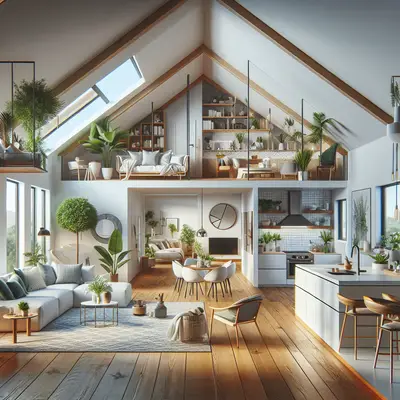
Consider how daylight moves across your rooms from dawn to evening. Strategically enlarging a window, lowering a sill, or adding a high clerestory opening can reframe an ordinary space as a luminous one. Sheer, floor-to-ceiling drapery in natural fibers slightly softens glare while preserving views, turning windows into sculptural elements rather than simple openings.
Artificial lighting, meanwhile, should work in nuanced layers: discreet architectural lighting for ambient glow, accent lighting to graze textured walls or art, and quiet, sculptural pieces that read as objets rather than mere task lamps. Dimmable, warm-color-temperature LEDs with high color rendering (CRI 90+) preserve the integrity of materials—marble veins, wood grain, and textile weaves appear richer and more authentic.
The true luxury is control. Integrating scenes—“morning,” “entertain,” “evening”—allows the home to shift moods elegantly without visual clutter. Keypads can be minimal and unobtrusive, letting the architecture, not the technology, take center stage.
2. Tactile Narratives: Surfaces That Age With Grace
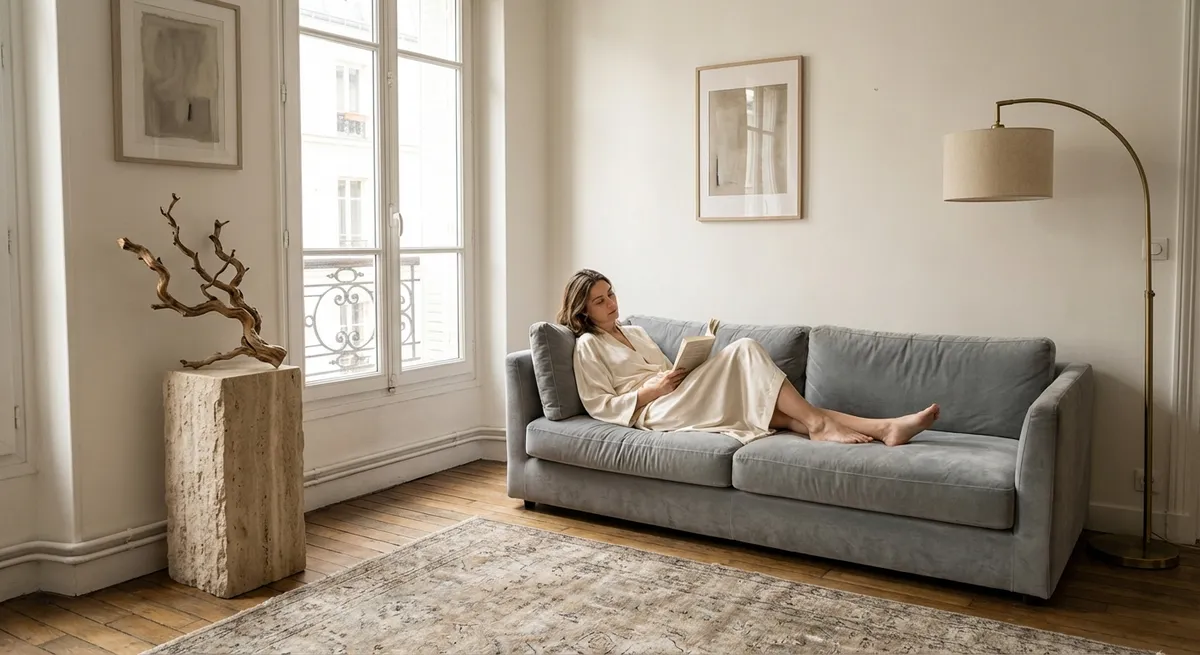
In sophisticated renovations, surfaces are expected to tell a story over time. Instead of pursuing a pristine, untouchable look, discerning homeowners are selecting materials that acquire a patina—marble that softens, brass that deepens, oak that develops subtle character underfoot.
Honest materials—stone, solid wood, lime plaster, unlacquered metals—offer a sensory depth that synthetics struggle to emulate. A honed marble counter with a subtle, lived-in sheen can feel more elevated than a glossy surface that insists on perfection. Similarly, hand-troweled plaster or limewash on walls catches light in delicate gradients, adding architecture-level interest without excessive decoration.
This perspective also encourages restraint. Rather than layering multiple statement finishes, anchor each room with one or two hero materials and let secondary textures support them quietly. A kitchen might pair warm oak millwork with a single, expressive stone, while hardware, fixtures, and textiles echo these tones in a softer register.
The result is an interior that feels coherent and grounded—less like it emerged from a showroom, and more like a considered collection of enduring surfaces that will reward years of daily use.
3. Purposeful Silence: Designing for Acoustic Comfort
Visual design receives endless attention; acoustic design rarely does. Yet in refined homes, the quality of silence is a defining luxury. Thoughtful acoustic planning can make even a compact space feel composed, calm, and resolutely premium.
Hard surfaces—stone floors, expansive glazing, high ceilings—can easily create echo and noise buildup if left unmediated. Counterbalance them with soft elements that are visually understated but acoustically powerful: lined draperies, wool or silk rugs with dense pile, upholstered wall panels behind the bed, or fabric-wrapped acoustic panels concealed within millwork. Even slender, upholstered dining chairs or a textile-clad banquette can significantly soften reverberation.
In open-plan layouts, consider micro-zoning through acoustic strategies: bookshelves that double as sound buffers, panelled ceilings with concealed absorptive backing, or half-height partitions clad in fabric or wood slats. Mechanical noise—HVAC, appliances, plumbing—deserves equal consideration; specifying quieter equipment and adding insulation around key chases can transform the overall atmosphere.
The goal is not silence in the absolute sense, but curated quiet: a softening of the auditory landscape so that conversation, music, and the simple sounds of daily life feel intimate rather than intrusive.
4. Integrated Technology, Invisible Presence
For the design-conscious homeowner, technology must serve the experience of the space, not dominate it. The most sophisticated renovations balance high performance with visual discretion—integrating smart systems that are felt rather than seen.
Televisions can disappear into panelled walls or behind sliding artwork; speakers retreat into ceilings, plaster, or joinery; charging stations and cable management are resolved inside drawers and consoles. Smart home controls are condensed into elegant, minimal interfaces or integrated into devices you already use, reducing visual noise on walls and countertops.
Where technology is visible, it should be designed to the same standard as the rest of the interior. Metal finishes on switches and outlets can be aligned with hardware; touch panels can sit in flush-mounted frames; motorized shades can be concealed within ceiling pockets for a seamless reveal.
Crucially, invest in a robust, centralized infrastructure during the renovation—conduit runs, wiring, and access panels—so that the home can gracefully adopt future technologies without disruptive construction. The true hallmark of a premium renovation is its ability to stay current functionally, even as its visual language remains timeless.
5. Curated Contrast: Pairing Restraint With One Bold Gesture
Elegance is rarely about excess; it is about discipline, punctuated by a few deliberate moments of drama. The most compelling renovated spaces today are grounded in a restrained palette and clean forms, then animated by one or two bold, highly intentional gestures.
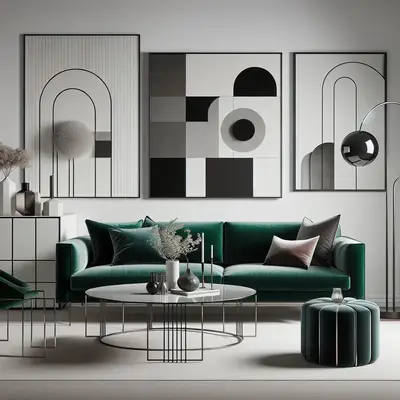
This might be a single, sculptural light fixture suspended over an otherwise quiet dining table, or a richly veined stone anchoring an otherwise minimal bathroom. It might be a deep, immersive color in a library or powder room, contrasted against calm neutrals in adjacent rooms, or a single piece of large-format art that defines an entry.
The key is balance. A strong gesture needs negative space around it to breathe. By holding back elsewhere—streamlined profiles on cabinetry, limited wood species, a coherent metal family—you preserve the impact of that one statement. This approach photographs beautifully for social media, yet feels even more satisfying in person, where the eye moves fluidly between calm expanses and curated focal points.
In doing so, your renovation transcends trend-chasing. It becomes a nuanced composition: serene, confident, and unmistakably yours.
Conclusion
A truly elevated renovation is less about adopting the latest “look” and more about refining how your home feels, functions, and endures. Treating light as a material, embracing patina, curating acoustic comfort, integrating technology invisibly, and using bold gestures with discipline are all strategies that quietly signal sophistication.
For homeowners at the threshold of a renovation, the opportunity is not merely to refresh, but to recalibrate—to craft spaces where every surface, sound, and shaft of light has been considered. The result is a home that reads as effortlessly contemporary today, and graciously timeless years from now.
Sources
- Harvard Graduate School of Design – The Architectural Detail of Light - Discusses the role of light as a design material in contemporary architecture
- U.S. Department of Energy – Energy Saver: LED Lighting - Provides guidance on LED lighting, color temperature, and efficiency considerations
- GSA – Sound Matters: How to Achieve Acoustic Comfort in Buildings - Outlines principles and strategies for acoustic comfort in interior environments
- Cornell University – Healthy Buildings, Healthy People - Explores the impact of environmental quality (including noise and light) on occupant well-being
- CEDIA – Recommended Practices for Residential Technology Infrastructure - Offers best-practice guidance on planning integrated home technology during renovation and construction
Key Takeaway
The most important thing to remember from this article is that this information can change how you think about Design Trends.