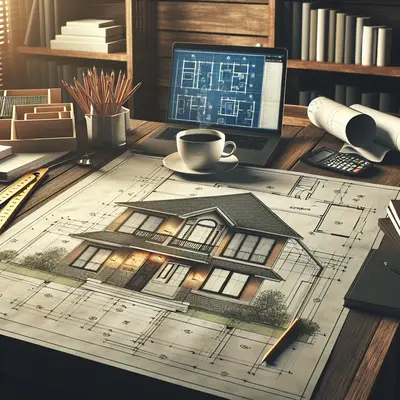
A remarkable renovation is never an accident. It is the quiet result of orchestration—of plans refined, contingencies anticipated, and decisions made with a level of discernment that most homes rarely receive. For homeowners who expect more than a standard update, project planning is not a bureaucratic hurdle; it is the hidden engine of a beautifully resolved home.
This is not about endless spreadsheets or rigid timelines. It is about designing a process that is as considered as the spaces it will ultimately create. The following perspectives move beyond basic checklists into a more elevated approach to planning—one that respects your time, your standards, and the long-term life of your home.
Planning as Curation, Not Just Coordination
Most renovation plans are built around logistics: dates, deliveries, inspections. A refined plan begins earlier and at a higher altitude—it treats the entire project as a curated experience rather than a sequence of tasks.
Instead of asking only “When will this be done?” and “Who will install that?”, begin with: “What is the story this home should tell when it’s finished?” This narrative becomes the lens through which you evaluate every decision—from the architectural lines to the hardware finishes. You are not merely collecting beautiful elements; you are editing with purpose.
This curatorial approach naturally pares back excess. It prevents design drift, where one impulse purchase or mid-project change ripples into an incoherent outcome. It also simplifies decision-making: if a material, feature, or layout choice does not serve the larger narrative, it does not belong in the plan. In practice, this yields a project that feels controlled, not chaotic; deliberate, not improvised.
Handled correctly, your project plan becomes more like a design brief for a luxury brand campaign: concise, principled, and ruthlessly aligned with a defined vision. Contractors and designers can then operate within clear creative parameters, dramatically reducing costly misunderstandings later.
Exclusive Insight 1: Design the “Daily Life Scenario” Before the Floor Plan
Most homeowners start by sketching rooms; the more strategic approach is to script daily life before drafting a single line. Think of this as a performance diagram: hour by hour, movement by movement, decision by decision.
Begin by mapping your typical weekday and weekend: where you prepare coffee, place your keys, open packages, charge devices, host guests, decompress at night. Capture the micro-moments—where you reach for a spice, where you plug in a laptop, where you’d prefer not to see clutter. Then layer in future scenarios: teenagers in the next five years, aging in place, extended family visits, evolving work-from-home rhythms.
Only then should spatial planning begin. Circulation patterns, sightlines, storage, lighting, and acoustics can be orchestrated around these lived realities rather than forced onto them. A kitchen island might shift slightly to keep the “coffee path” from intersecting with the “school-lunch assembly line.” A mudroom may be reconfigured to incorporate parcel-drop zones and charging drawers, reflecting contemporary habits.
This approach transforms planning from abstract space allocation into the design of an optimized lifestyle. The final layout feels intuitively right because it is built from your actual behavior—not from generic template plans.
Exclusive Insight 2: Establish a Decision Hierarchy Before You Break Ground
Renovation fatigue rarely comes from the work itself; it comes from decision overload. Sophisticated projects avoid this through a pre-defined decision hierarchy and governance framework, set before anyone arrives on site.
First, identify which decisions are “sacred” and which are “flexible.” Structural changes, natural light access, and major finishes might sit at the top of your hierarchy: these should be almost immovable once agreed. Lower-tier decisions—such as paint colors in secondary spaces or minor storage configurations—can be left intentionally open for later refinement without threatening the project’s integrity.
Then, determine roles. Who has final say on design? Who signs off on costs? Who is empowered to make on-the-spot choices if a material is delayed or a site condition is uncovered? In more complex households, it can be useful to assign domains: one person leads on aesthetics, another on function and technical performance, with a documented tie-breaking mechanism.
By embedding this hierarchy in your project planning, you transform potential conflict into process. When a surprise arises on site—and it will—the team knows which decisions are negotiable, who is consulted, and how quickly a path forward must be agreed. The result is momentum without panic, control without micro-management.
Exclusive Insight 3: Plan for Silence, Privacy, and Acoustics from Day One
Most project plans obsess over square footage and finishes while treating acoustics as an afterthought. Yet in a truly elevated home, the acoustic quality is as important as the visual composition. Planning for quiet and privacy at the outset is one of the most underestimated luxuries in renovation.
This begins at floor-plan level: separating noisy zones (kitchen, media, play areas) from restorative ones (bedrooms, study, retreat spaces), and ensuring doors, transitions, and circulation do not funnel sound into the very rooms meant for calm. It continues into material selection—solid-core doors, acoustic underlayment beneath hard flooring, thoughtfully placed rugs and textiles, and intelligent wall assemblies between key rooms.
For multi-storey homes, consider the specific sound paths: footfall over bedrooms, water noise behind headboards, the hum of mechanical equipment adjacent to living areas. During planning, allocate budget explicitly for acoustic upgrades instead of treating them as “nice to have” extras. Small shifts—relocating a laundry stack, upgrading insulation in a single party wall, repositioning HVAC runs—are dramatically easier and less expensive when decided before framing begins.
A well-planned acoustic environment is not visually obvious, but it is immediately felt. It is the difference between a house that merely looks refined and one that genuinely lives like a sanctuary.
Exclusive Insight 4: Treat Infrastructure as a Long-Term Asset, Not a Line-Item
Many project plans allocate meticulous attention to visible elements and only cursory care to “invisible” infrastructure: wiring, plumbing, ventilation, and building envelope performance. Yet these are the systems that will govern comfort, safety, and operating costs for decades.
An elevated planning process reframes infrastructure as a capital investment rather than an expense to be minimized. Before finalizing your scope, commission a clear-eyed assessment of your home’s electrical capacity, plumbing age and routing, insulation quality, and ventilation sufficiency. Use this data to make intentional upgrades, not reactive patchwork.
Consider future-proofing: add capacity for electric vehicle charging, integrated smart-home systems, security devices, and evolving appliance loads. Evaluate insulation and air sealing not only for energy savings but for comfort and moisture management. Where possible, rationalize plumbing runs to reduce potential leak points and improve serviceability.
This may mean redirecting some budget from hyper-trendy finishes to robust behind-the-walls work. The reward is a home that feels stable, efficient, and resilient—and a renovation that will not require invasive rework five years later to support the way you actually live.
Exclusive Insight 5: Build a Contingency Culture, Not Just a Contingency Fund
Most sophisticated homeowners accept the need for a financial contingency. Fewer cultivate a contingency culture—a shared mindset in which flexibility, transparency, and resilience are deliberately baked into the project from the start.
A contingency culture begins with honest scenario planning: identifying categories of risk (structural surprises, permitting delays, product discontinuations, labor availability) and agreeing in advance how each will be handled. Rather than vaguely “hoping for the best,” your team has a pre-defined playbook for navigating the probable, not just the theoretical.
Time contingencies are just as important as financial ones. Build deliberate “float” into your schedule around critical path items—custom millwork, specialty stone, imported fixtures—so that a single delay does not cascade into months of disruption. Where possible, sequence work so that if one trade is held up, another can progress in parallel.
Communication is the final pillar. Establish regular, structured updates where deviations from plan are discussed with clarity and data—not alarm. In this culture, surprises are treated as variables to be managed, not crises to be survived. The lived experience of the renovation becomes calmer, more professional, and far more aligned with the level of investment you are making.
Conclusion
Exceptional renovations are not defined solely by their finishes or their floor plans. They are distinguished by the rigor, clarity, and foresight embedded in their planning. When you curate your project like a narrative, script your daily life before drawing walls, elevate decision-making into a structured hierarchy, honor acoustics and infrastructure, and cultivate a robust contingency culture, you move beyond mere improvement into transformation.
The true luxury is not simply arriving at a beautiful home—it is traveling there through a process that feels deliberate, intelligible, and under control. In that sense, a meticulously crafted project plan is not paperwork; it is the first and most essential layer of your refined renovation.
Sources
- U.S. Department of Energy – Home Energy Upgrades – Guidance on improving building envelope, HVAC, and infrastructure for long-term performance
- Harvard Joint Center for Housing Studies – Remodeling Futures – Research and reports on renovation trends, costs, and homeowner priorities
- National Association of Home Builders – Remodeling Planning Resources – Best practices on planning, hiring professionals, and managing project scope
- Building Science Corporation – Guides on Building Enclosures and Systems – Technical insights on moisture, insulation, acoustics, and building performance
- American Institute of Architects – Homeowner’s Project Handbook – Frameworks for project organization, roles, risk, and decision-making in residential design and construction
Key Takeaway
The most important thing to remember from this article is that this information can change how you think about Project Planning.