Elegance in renovation rarely announces itself; it’s felt before it’s seen. The most refined homes are not defined by grand gestures, but by a quiet, orchestrated alignment of light, proportion, material, and comfort. For homeowners planning a renovation, the true luxury lies not only in what guests admire, but in what you experience daily—those nearly imperceptible decisions that make a space feel composed, effortless, and enduring.
Below are five exclusive insights that move beyond surface finishes and into the deeper architecture of a sophisticated home.
The Power of Proportion: Designing Rooms That “Feel Right”
A room can be beautifully furnished and still feel subtly off if its proportions are neglected. The most cultivated renovations begin by correcting scale and relationship long before color palettes and fabrics are chosen.
Proportion starts with height, width, and depth. Consider how ceiling height relates to window size, door casings, and millwork. Modestly raising a doorway or thickening a casing can visually “stretch” a room, making it feel more tailored. Similarly, rethinking the relationship between window placement and major furnishings (sofa, bed, dining table) prevents awkward layouts that no amount of decorating can fully resolve.
Thoughtful proportion also extends to circulation. A refined home typically avoids overly narrow corridors, constricted entries, and cramped transitions between rooms. Where structural changes are possible, slightly widening a hallway or aligning doorways along a deliberate axis can introduce a sense of calm order. These proportional adjustments rarely appear in listing photos, yet they dramatically influence how gracious a home feels day to day.
Light as Architecture: Layering Illumination with Intention
In a premium renovation, lighting is treated as architecture, not afterthought. The aim is not brightness, but clarity, depth, and mood—achieved through carefully layered sources that honor both function and atmosphere.
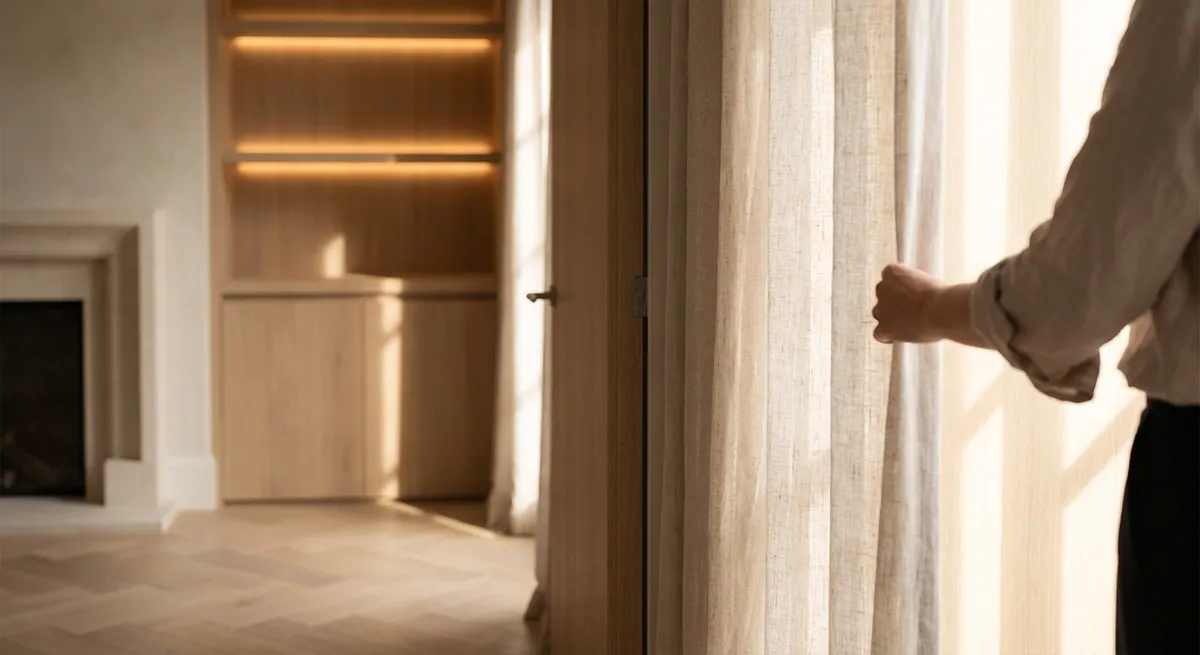
Begin with natural light. Understand how the sun travels through your property and plan window size, placement, and treatments accordingly. Enhancing a single well-positioned window, or adding a transom or internal glass panel, can introduce light choreography that feels far more luxurious than an additional ceiling fixture.
Artificial lighting should be approached in layers: ambient (general), task (focused), and accent (decorative). Incorporate dimmable circuits, low-level evening lighting in corridors, and warm color temperatures that flatter skin tones and materials. Integrated lighting—under-cabinet strips, cove lighting, illuminated niches—adds visual richness without visual clutter.
A particularly refined strategy is to design “scenes” for specific times of day: early morning, entertaining, dining, and evening wind-down. With the right controls (smart dimmers, discreet keypads), your lighting can subtly adapt to your routine, making the home feel composed without constant adjustment.
Material Continuity: Crafting a Cohesive, High-End Narrative
Luxurious homes frequently share a quiet trait: material continuity. Rather than a parade of finishes, there is an underlying narrative—stone, wood tone, metal, or color temperature—that flows gently from room to room.
This does not mean uniformity. Instead, think in terms of a limited, curated vocabulary of materials that repeat thoughtfully throughout the home. A stone used in the entry may reappear on a fireplace hearth. A particular metal finish might be echoed in door hardware, cabinet pulls, and selected light fixtures. Even subtle repetitions—a consistent baseboard profile, a recurring grout color—contribute to a sense of intention.
During your renovation, build a “material map” of the entire home, not just individual rooms. This map should consider transitions: where wood meets tile, where stone meets plaster, where interior meets exterior. The more elegant the transition, the more elevated the result. Flush thresholds, carefully aligned grout lines, and intentionally placed expansion joints can be the difference between a home that appears expensive and one that truly feels meticulously crafted.
Quiet Systems: Investing in Comfort You Can’t Photograph
The most sophisticated renovations invest heavily in what no one sees: comfort systems that make the home feel serene, stable, and effortlessly livable. These are not the glamorous line items, but they often define long-term satisfaction.
Consider acoustic comfort first. Thoughtful insulation, sound-attenuating doors, and flooring underlayments can radically improve the way your home sounds and feels. A quiet primary suite, a hushed home office, and softened footsteps between levels contribute to an atmosphere of calm that guests may not identify, but everyone experiences.
Climate control is equally consequential. Zoned HVAC, well-insulated envelopes, high-performance windows, and effective shading devices create consistency—no hot-and-cold pockets, no noisy vents blasting at inopportune moments. Radiant floor heating in bathrooms or entries, while invisible, reads as pure luxury in use.
Smart, subtle technology also belongs here: whole-house water filtration, leak detection systems, integrated ventilation for indoor air quality, and discrete wiring for future upgrades. These elements rarely receive social media attention, yet they are precisely what distinguish a merely renovated home from a truly considered one.
Future-Proof Elegance: Designing Flexibility without Compromise
A refined renovation is not just beautiful today; it remains relevant as life evolves. Future-proofing is often misunderstood as purely resale-driven. In reality, it is about preserving elegance by avoiding awkward retrofits and mismatched additions later.
Begin with spatial flexibility. Rooms that can gracefully shift function—guest suite to office, playroom to media room, formal dining to library—age far better than hyper-specific spaces. This can be achieved through proportion (ample wall lengths, logical placement of doors and windows), integrated storage, and subtle infrastructure (floor outlets, extra electrical capacity) that accommodates new layouts.
Accessibility-informed design can also be woven in discreetly: wider doorways that look intentionally generous rather than clinical, curbless showers that read as spa-like, and staircases with enough wall support to accept a future handrail or lift if needed. These choices signal thoughtfulness rather than compromise.
Finally, plan for layers of future personalization. Leave visual “breathing room”—blank wall spans, restrained built-ins, and timeless core finishes—so that art, textiles, and evolving tastes can shift without triggering another major renovation. The most luxurious homes are those that can adapt without losing their composure.
Conclusion
Renovation at a premium level is less about spectacle and more about discernment. By concentrating on proportion, light, material continuity, quiet systems, and future-proof elegance, you move beyond cosmetic upgrades into the realm of enduring refinement. These are not decisions that shout; they whisper—through comfort, coherence, and a sense that every detail has been quietly, deliberately resolved.
When executed with care, these invisible luxuries become the true hallmark of a cultivated home: a space that feels as composed on the thousandth day as it did on the first.
Sources
- U.S. Department of Energy – Energy Saver: Home Efficiency – Guidance on insulation, windows, and HVAC efficiency that supports decisions about “quiet” comfort systems
- Harvard Joint Center for Housing Studies – Remodeling Futures Program – Research and reports on renovation trends, long-term value, and homeowner priorities
- American Institute of Architects (AIA) – Residential Design Resources – Professional insights on proportion, light, and residential planning principles
- National Institute of Building Sciences – Whole Building Design Guide – Comprehensive best practices on integrated design, acoustics, and building systems
- Mayo Clinic – Home Safety and Aging in Place – Practical guidance on accessibility and future-proofing that informs discreet, long-term design decisions
Key Takeaway
The most important thing to remember from this article is that this information can change how you think about Home Renovation.