There’s a story making the rounds today: a new employee arrives at a sales job with his own $1,800 Herman Miller Aeron chair, only to find a colleague repeatedly “borrowing” it. The saga escalates so severely that the chair thief is ultimately arrested on the spot. It’s an almost absurdly modern workplace drama, but beneath the headlines lies a lesson that high-end renovators should not ignore: in a world drowning in generic, mass-produced everything, the pieces that are thoughtfully chosen, ergonomically superior, and quietly expensive become non‑negotiable territory.
If an office chair can inspire that level of territorial fervor, consider what happens when the setting is your home—your bath, your kitchen, your sanctuary. The Aeron incident is not just an HR nightmare; it’s a vivid reminder that design objects with performance and provenance carry real emotional weight. As you plan your next renovation, the question is no longer just, “What looks beautiful?” but “What will I defend, fiercely, ten years from now because it still feels indispensable?”
Below are five exclusive, renovation‑focused insights inspired by this very real office-chair melodrama—each designed for homeowners who treat their spaces with the same seriousness that some people reserve for fine art collections.
Elevating Comfort to a Non‑Negotiable Design Principle
The Aeron chair exists because someone decided that comfort, posture, and micro‑adjustability matter. That same philosophy should guide your renovation. Most homeowners lavish budget on visible finishes while treating comfort—acoustics, ergonomics, thermal balance—as an afterthought. In a premium renovation, comfort becomes the design brief, not the footnote. Think radiant floor heating precisely zoned so you never step onto a cold tile at 6 a.m., or integrated, whisper‑quiet ventilation that keeps a marble-clad bathroom from ever feeling humid or stuffy.
Begin by auditing how you live, not just how you want your home to look. Where do you perch with a laptop and end up with a sore neck? Which rooms become uninhabitable at 3 p.m. in summer light? Renovation excellence lies in removing these small frictions. Specify counters at the correct working height for the primary cook, not a default standard. Commission built-in banquettes with tailored lumbar support rather than generic dining chairs. Just as the Aeron justifies its price with micro‑adjustments, your renovation should justify its investment with micro‑comforts that you notice every single day.
Designing “Non‑Shareable” Zones: The Luxury of Truly Personal Space
The $1.8K chair debacle centered on a simple boundary: “This is mine, and it stays here.” In most homes—particularly open‑concept ones—personal territory becomes fuzzy. A sophisticated renovation doesn’t merely create rooms; it creates clearly articulated, almost sanctified zones with defined ownership and intent. This might mean a fully bespoke reading niche with integrated book storage and lighting tailored to one person’s preferences, or a dressing room where millwork is literally measured and planned around a particular wardrobe and daily ritual.
When planning, identify the spaces that should be as personal as that Aeron chair. A primary suite, for example, can feature split vanities with distinct lighting temperatures for each partner, or silent-closing partitions that allow one person to rise at 5 a.m. without waking the other. In a home office, specify a truly professional-grade task chair, sit‑stand desk, and acoustic treatment so it feels less like a borrowed corner and more like a protected domain. The goal is not selfishness—it is psychological clarity. When every family member knows, “This is your zone, created precisely for you,” it subtly removes the need for territorial conflict later.
Investing in Fewer, Better Pieces: The Anti‑Clutter Renovation Strategy
The Aeron story went viral largely because of its price tag: $1,800 for a chair. For some, that feels outrageous; for those who understand design, it’s an investment in years of daily use. Translated to renovation, this is the difference between scattering budget across dozens of forgettable items versus strategically focusing on a handful of “forever” pieces that elevate the entire home. A single impeccably chosen object—like an iconic light fixture from Flos or a handcrafted dining table from a local maker—can anchor a room with the same presence that the Aeron commands in an office.
Approach your renovation with a collector’s mindset. Where can you choose one extraordinary thing rather than many ordinary ones? Perhaps it’s a sculptural stone slab for the kitchen island, treated almost as a monolith, while secondary surfaces quietly recede. Or a single, heirloom-quality lounge chair in the media room that becomes “the seat” everyone covets. This is not about ostentation; it’s about curating objects with lasting functional and emotional value. When the foundation is solid—high-performing windows, quality hardware, properly installed flooring—the need for perpetual replacement evaporates, and your home, like that famous task chair, ages gracefully instead of becoming disposable.
Ergonomic Intelligence: Bringing Workplace Precision into the Home
The Herman Miller Aeron became an office mainstay because it answered a very specific question: how do we support the body, hour after hour, without fatigue? As hybrid work and full‑time home offices become the norm, that same question must guide residential renovation. Your kitchen work triangle is effectively your “task chair” of movement; your stair proportions, counter depths, and handle placements either support your body or subtly work against it.
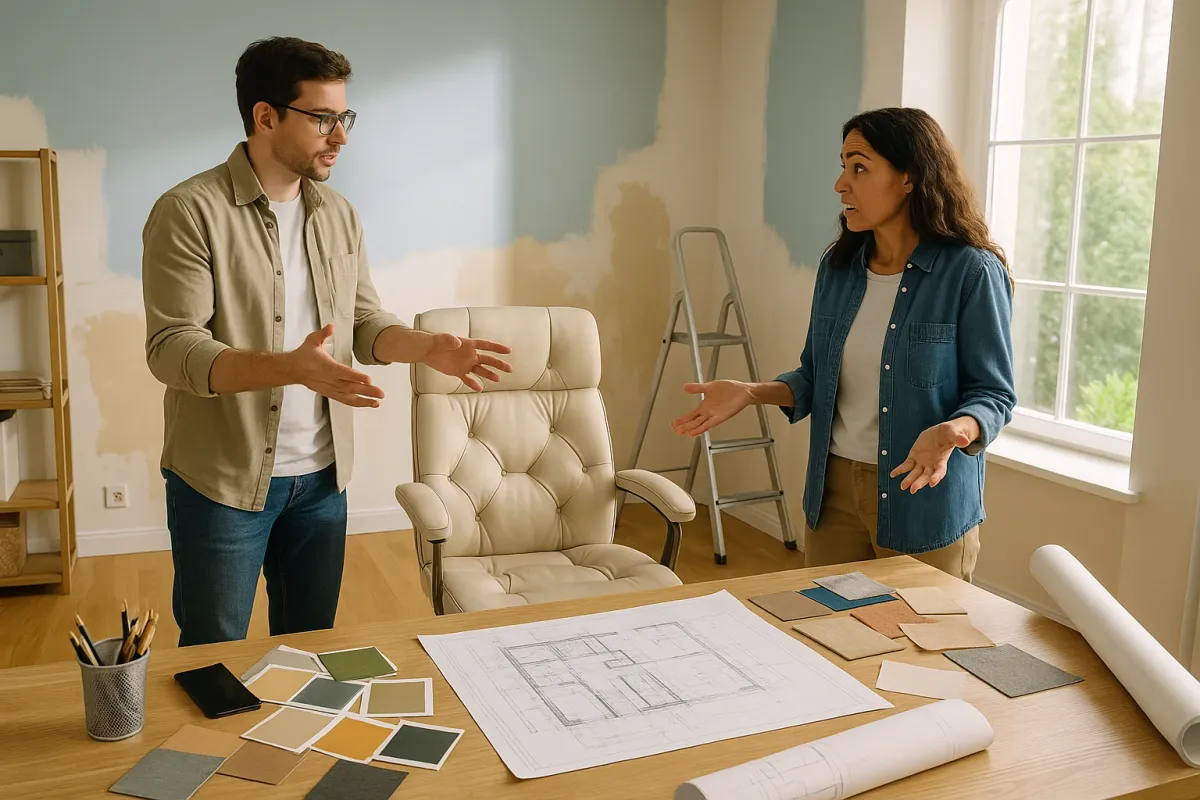
Elevate your plans by insisting on ergonomic drawings, not just aesthetic mood boards. Ask your architect or designer to model reach zones in kitchens for the primary users, to map sight lines from key seating positions to windows and screens, and to consider handrail grip, tread depth, and riser height with the same care a furniture engineer devotes to seat pan tilt. In bathrooms, specify shower controls at an easily reachable height just inside the entry, so you never need to step into cold water. In living rooms, plan layered seating heights—low loungers, upright reading chairs, and generous sofas—so every body type and every posture has a place. This level of ergonomic intelligence transforms a beautiful house into a deeply inhabitable one.
Future‑Proofing Ownership: Documentation, Provenance, and Resale Elegance
In the viral office incident, the new hire had to prove ownership of the $1.8K chair—with receipts. That proof changed the outcome. In renovation, documentation plays a similar, often overlooked role. Meticulous records of what you installed, who built it, and why it was chosen can protect your investment, simplify maintenance, and subtly enhance resale value. For high‑end projects, think of your home almost as a limited‑edition design object with a provenance file.
Create a digital “Renovation Dossier” for your property: original plans, permit approvals, warranties, finish schedules, even the stories behind key selections—why you chose that Italian terrazzo, which artisan fabricated those walnut doors, which smart‑home ecosystem underpins your lighting and security. Store serial numbers and supplier contacts for major fixtures and systems, much as you would for a collectible object. If you ever sell, you are not merely handing over a house; you are transferring stewardship of a meticulously documented work of design. In a market increasingly attuned to authenticity and traceability—whether in art, fashion, or furniture—that level of clarity is not just reassuring; it is quietly luxurious.
Conclusion
The tale of the contested $1,800 chair is amusing on the surface, but it reflects something profound: truly well‑designed objects—and, by extension, truly well‑designed homes—provoke loyalty, protectiveness, and even passion. As you plan a renovation today, in a world that is finally rethinking how and where we work, live, and rest, resist the temptation to chase trends or fill space for its own sake.
Instead, design with the seriousness of a curator and the empathy of an ergonomist: prioritize uncompromising comfort, define personal zones with intention, invest in fewer but better elements, embed ergonomic intelligence into every room, and document your choices with the rigor of provenance. Do this, and your renovated home won’t just look current—it will feel indispensable, year after year, in the same way that one very controversial office chair clearly did.
Key Takeaway
The most important thing to remember from this article is that this information can change how you think about Home Renovation.