The internet is currently obsessed with a single, surprisingly old‑world material: wood. A viral feature spotlighting “50 Times People Made Something Amazing Out Of Wood” has ignited fresh appreciation for what master craftspeople can coax from a simple block of timber. In an age of AI renderings and ultra‑synthetic finishes, these hand‑made, tactile pieces are resonating—precisely because they feel human, enduring, and intimately crafted.
For homeowners planning serious renovations in 2025–26, this is more than a fleeting social trend. The new design language of luxury is moving away from glossy sameness and towards bespoke, wood‑driven interiors that feel tailored, timeless, and quietly expressive. Here’s how to translate that movement—from viral woodworking showcases to your own home—through five sophisticated, renovation‑ready insights.
1. Sculpted Wood Is Replacing Statement Walls
For the past decade, “statement” has usually meant color: a bold painted wall, graphic wallpaper, or a slab of veined marble. Today, the most elevated homes are trading surface noise for sculpted calm. Think fluted oak panels wrapping a curved entry wall, ribbed walnut niches in a dining room, or softly undulating timber screens defining a living area.
Those extraordinary wood pieces trending online—intricately carved benches, geometric reliefs, flowing forms—are the artisanal cousins of what high‑end architects are now building into walls, ceilings, and doors. In projects from Copenhagen to Los Angeles, designers are integrating:
- 3D relief wall cladding in oak, ash, and walnut to add depth without pattern fatigue
- Curved wood paneling to soften rectilinear rooms and visually lengthen corridors
- Slatted partitions that filter light and views, replacing full‑height solid walls in open‑plan spaces
For a renovation, this is not a decorative afterthought; it’s a line item in your architectural scope. Budget for custom millwork early, the same way you would for windows or flooring. A single sculpted wall—executed with precision—can do more for perceived luxury than an entire floor of expensive but generic tile.
Renovation strategy: Identify one circulation zone (entry, stair, or hallway) where carved, fluted, or slatted wood can become a permanent architectural feature. Design it as part of the framing and electrical plan, not as a late decorative upgrade.
2. Heirloom‑Grade Built‑Ins Are Beating Moveable Furniture
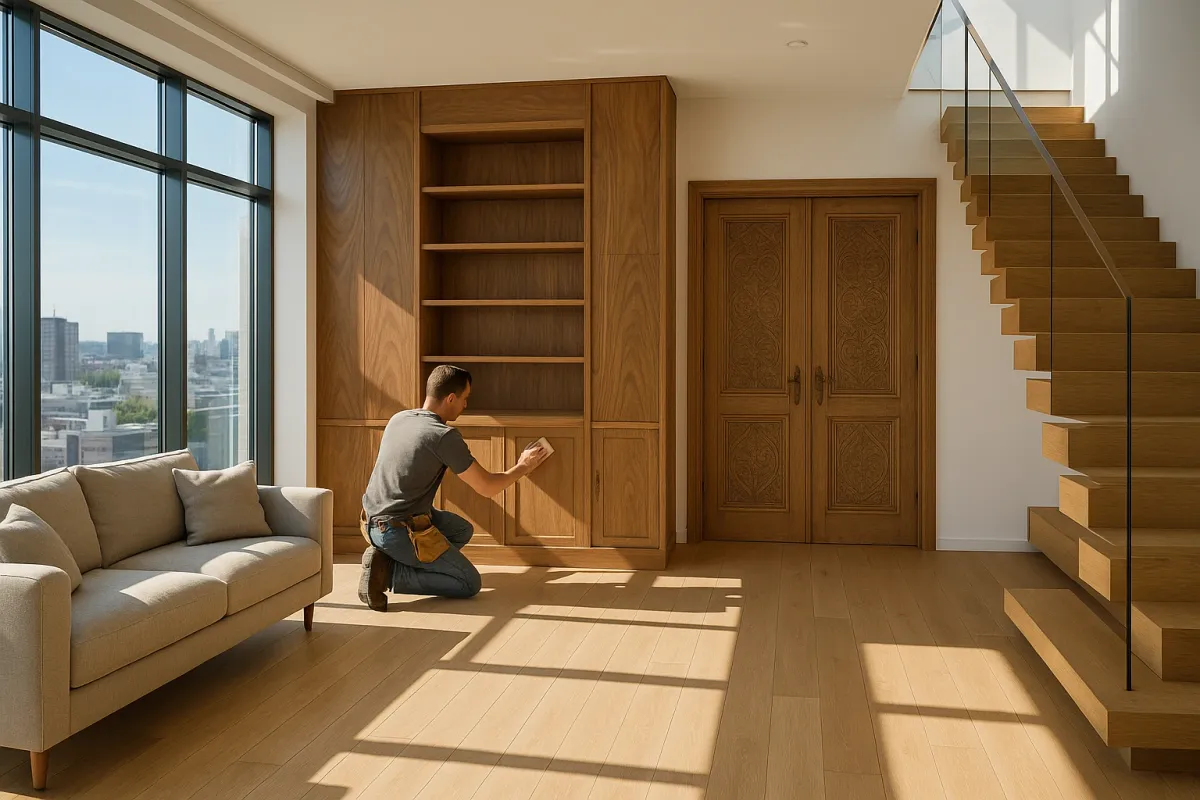
The most shared woodworking pieces online have one thing in common: they feel like they could live for a century. This “future heirloom” mindset is now influencing built‑ins—bookshelves, window seats, bar cabinets, and dressing rooms are being designed more like collectible furniture than basic storage.
Instead of generic cabinetry, luxury renovations are embracing:
- Integrated wood furniture walls that combine display, storage, and lighting in a single sculptural composition
- Thick, furniture‑like edges and inset panels that signal craftsmanship rather than mass production
- Mixes of solid wood and fine veneer, used honestly—veneers for stability on large panels, solid stock for edges, pulls, and details
Global showrooms are reinforcing this. From Milan Design Week installations to boutique joinery studios on Instagram, the most aspirational spaces feature built‑ins that could almost be detached and placed in a gallery. They have weight, proportion, and clarity of detailing.
For a homeowner, the implication is clear: if you are planning custom cabinetry, design it as permanently integrated furniture rather than “boxes on a wall.” Branded furniture will date; elegantly proportioned millwork rarely does.
Renovation strategy: Choose one primary room—often the living room or library—and allocate a dedicated portion of your budget to an heirloom‑grade built‑in. Work with a millworker to refine details like reveals, handle profiles, and shelf thicknesses, and lock these into drawings before pricing. This is one place not to value‑engineer.
3. The New Luxury Is Visible Joinery, Not Invisible Hardware
The viral woodworking projects drawing millions of views don’t hide how they’re made. You see dovetails, finger joints, butterfly keys, and careful laminations. In high‑end interiors, the same shift is underway: craftsmanship is no longer disguised behind ultra‑minimal flush doors and hidden mechanisms; it’s celebrated.
In leading residential projects, this manifests as:
- Exposed joinery: visible mortise‑and‑tenon details at stair balustrades, or contrasting wood butterfly keys stabilizing large tabletops and headboards
- Expressed structure: ceiling beams, posts, and stair stringers in beautifully finished wood, treated as design moments rather than purely structural elements
- Tactile hardware: hand‑turned wood pulls, inset grips, or leather‑wrapped handles instead of generic metal knobs
The psychology is subtle but powerful. Visible joinery telegraphs integrity—it suggests that what you cannot see is built with the same care as what you can. In a market saturated with “luxury” veneers and effortless glossy finishes, deliberate, honest construction details feel rare and desirable.
Renovation strategy: Identify two or three points of touch—door handles, stair handrails, cabinet pulls—where you can showcase refined woodwork or bespoke hardware. In your scope, call these out explicitly as custom items, and request mockups or samples. This is where the hand of the craftsperson becomes visible every single day.
4. Tone‑On‑Tone Wood Palettes Are The New Neutrals
Where social media once favored high‑contrast “before and after” reveals—white walls against dark floors, black windows slicing through pale façades—the mood is now shifting to quieter tonal harmonies. The most sophisticated wood‑centric interiors online are layered, not loud: oak on oak, walnut on walnut, each element varying slightly in shade, sheen, or grain direction.
Designers are composing wood palettes the way fashion houses build a collection:
- Controlled variation: three to four related wood tones, rather than a different species in every room
- Directional play: running flooring planks one way, ceiling battens another, cabinetry grain vertically to create subtle rhythm
- Sheen management: pairing matte floors (to hide wear) with a soft satin on millwork and polished highlights on furniture
This move towards wood‑on‑wood is a direct response to digital fatigue. In photographs and on screens, flat whites and hard contrasts can feel clinical; textured neutrals photograph as rich, warm, and inhabitable, which is why they dominate editorial spreads and design‑forward feeds right now.
Renovation strategy: Treat wood selection like a curated wardrobe, not a catalog order. Build a physical “material story” board with your flooring, cabinetry, doors, and furniture veneers together. View them in daylight and evening light. Aim for a cohesive gradient rather than a patchwork of unrelated tones, and specify finish sheens as carefully as colors.
5. Commissioned Woodwork Is Becoming The Ultimate Personal Signature
One reason those extraordinary wood creations are circulating so widely is that they feel irreproducible—each piece is clearly the result of one maker’s hands and one client’s brief. The highest tier of residential design is embracing this by folding in at least one commissioned wood element per project: a dining table tailored to the room’s proportions, a carved screen referencing local landscapes, or a hand‑built bath surround in native timber.
Instead of defaulting to international furniture brands alone, discerning homeowners are starting to:
- Collaborate with local makers whose work they’ve discovered on Instagram, design fairs, or craft platforms
- Source meaningful timber—from a family property, a reclaimed beam, or a historic structure—and transform it into a singular feature
- Integrate art and function: consoles, headboards, and benches that double as sculptural focal points
This approach aligns design with narrative. In a world of mass‑produced “luxury,” the most sophisticated spaces are those with a traceable story: who made this, from what, and why? That story is increasingly being written in wood.
Renovation strategy: Reserve part of your furniture or finishes budget for one bespoke wooden commission. Decide early whether that piece should anchor the dining room, entry, or primary suite, and involve your architect or designer in the brief so proportions and power supply (for lighting or integrated tech) are planned from the outset. Document the story of the piece—maker, material origin, process—as part of your home’s design dossier.
Conclusion
The renewed fascination with masterful woodworking—evident in the surge of extraordinary timber projects circulating online—is not nostalgia. It’s a recalibration of what feels truly luxurious in the home: warmth over gloss, craft over branding, narrative over novelty.
For homeowners embarking on renovations, the opportunity is clear. Instead of chasing fast‑moving decor trends, invest in structural and crafted wood elements that will quietly hold their power for decades: sculpted walls, heirloom built‑ins, honest joinery, layered wood palettes, and one or two commissioned pieces that are indisputably yours.
In the right hands, wood is no longer just a material underfoot or behind paint; it becomes the architectural language of the entire home—measured, enduring, and exquisitely personal.
Key Takeaway
The most important thing to remember from this article is that this information can change how you think about Design Trends.