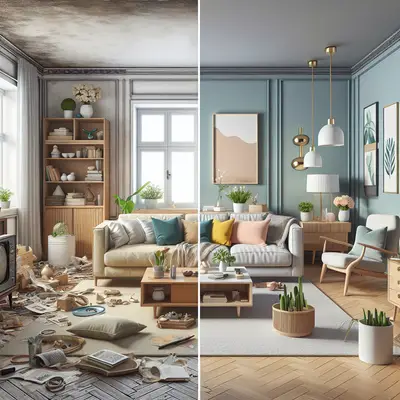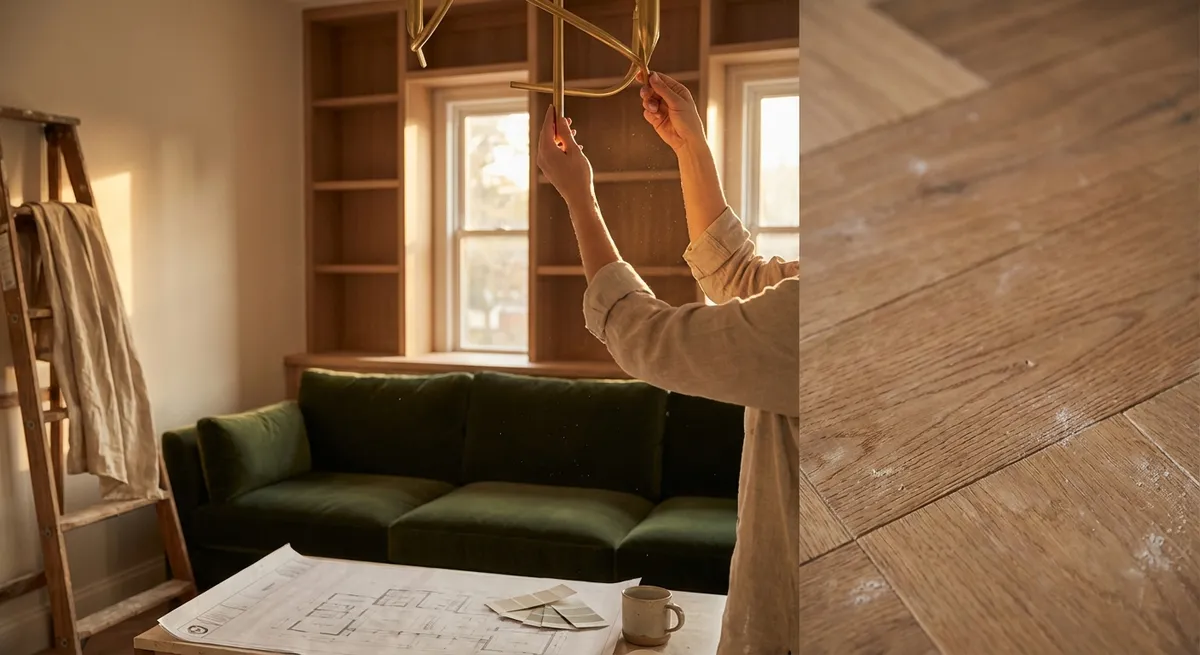
Renovation at its best is less about demolition and more about composition. The most refined homes are not simply upgraded; they are orchestrated—light, circulation, materials, and daily rituals working in quiet harmony. For homeowners who expect more than a standard makeover, the real luxury lies in making the entire space feel inevitable, as though it could never have been designed any other way.
Below are five exclusive, often-overlooked insights that distinguish a competent renovation from a truly exceptional one.
Designing for the “Silent Day”: How Your Home Behaves When No One Is Watching
Most renovation plans are built around special occasions—dinner parties, holidays, entertaining. Yet the true test of a home is the “silent day”: an ordinary Tuesday when life is unscripted, slightly chaotic, and you are simply living.
Instead of beginning with aesthetic boards, start by mapping your most unremarkable routines. How do you move before coffee? Where does your bag land when you walk in? Which doors you always leave open, which you habitually keep closed? A refined renovation anticipates these micro-behaviors and quietly reshapes them.
This can manifest as:
- A slightly wider circulation route between kitchen, dining, and outdoor area so two people can cross without a dance.
- Drop zones that are integrated into millwork—concealed charging drawers, shallow mail niches, slender key ledges—rather than clutter-prone surfaces.
- A laundry layout designed not just for washing, but for folding, steaming, and staging clothes directly back into wardrobes, minimizing back-and-forth.
By designing for the mundane, you achieve a home that feels preternaturally calm on busy days and effortless on quiet ones—an understated form of luxury that no finish can match.
The Discipline of Light: Sculpting Atmosphere from Dawn to Dusk
Light is the most undervalued design material in residential renovations, yet it is the element you experience constantly. An elevated renovation treats light as a layered composition: natural, ambient, task, and accent, all carefully orchestrated by time of day.
Begin with natural light: understand how the sun moves across your property and which spaces deserve priority—often the kitchen, breakfast areas, and any room where you seek calm focus. Consider:
- Repositioning or resizing key windows to frame landscape elements and soften glare rather than flooding a room indiscriminately.
- Introducing clerestory or high-level windows in privacy-sensitive spaces (such as bathrooms) to draw in light without sacrificing seclusion.
- Aligning sightlines so that when you stand in threshold spaces—hallways, doorways, stair landings—you catch layered light from more than one room.
Then choreograph artificial lighting as a nuanced hierarchy, not a grid of downlights. Ambient lighting should flatter the architecture; task lighting should support how you actually work and relax; accent lighting should add depth, highlighting art, texture, and architectural details. The most polished homes are wired with dimmable, color-consistent fixtures and scene controls, so morning, evening, and entertaining each has a distinct, intentional light “score.”
When light is shaped with this degree of discipline, even modest rooms feel cultivated and composed.
Material Continuity: Creating Quiet Luxury Through Restraint, Not Excess
Sophisticated interiors rarely shout. Instead of assembling a collage of striking finishes, they rely on a disciplined palette, repeated with subtle variation to create a sense of flow and coherence.
Rather than chasing every new material trend, identify one or two “anchor” materials and let them quietly recur across the home:
- A singular timber tone echoed in flooring, stair handrails, and custom joinery, shifting only in finish (matte vs. satin) or pattern (plank vs. panel).
- A consistent metal finish—brushed nickel, aged brass, or blackened steel—for hardware, door handles, fixtures, and lighting trims, avoiding a visual “noise” of competing metals.
- Stone or composite surfaces used strategically: perhaps one hero stone in the kitchen that subtly reappears as a powder room vanity or fireplace hearth.
This continuity calms the eye and visually enlarges the home. It also elevates more affordable finishes: a well-chosen, restrained laminate or porcelain can read as far more luxurious when it is part of a disciplined material story rather than one more competing element.
True refinement often lies not in the cost of each surface, but in the restraint with which they are combined.
Spatial Hierarchy: Giving Each Room a Clear Reason to Exist
Many renovations add square footage yet end up with spaces that feel oddly underused or indistinct. The missing ingredient is spatial hierarchy—an intentional ranking of rooms by purpose, intimacy, and prominence.
Think of your home in “tiers”:
- Public / social layer: entry, living, dining, kitchen, powder room, outdoor entertaining. These spaces set your home’s character and should be visually coherent, with strong axial views and a sense of arrival.
- Semi-private layer: studies, media rooms, secondary lounges, kids’ zones. These can be more relaxed, tailored to daily life and personal taste.
- Private layer: bedrooms, dressing areas, ensuite baths, and any space related to retreat and restoration.
A strategic renovation clarifies which rooms anchor each layer and then shapes the rest of the plan accordingly:
- The entry should establish a controlled view—never directly into the kitchen mess, ideally toward light, art, or a considered architectural element.
- Circulation routes should feel intuitive, with visual “destinations” (a window, a bookshelf, a curated niche) rather than blank corridors.
- Primary suites deserve more than a larger bedroom; they benefit from a subtle sequence: threshold, sleeping area, dressing, bathing—each slightly more intimate than the last.
When each room has a clear purpose and place in the hierarchy, your home stops feeling like a series of renovated boxes and starts behaving like a coherent, architectural experience.
Future-Proofing with Intent: Designing for the Next Decade, Not the Next Sale
Much renovation advice is tethered to resale value, which leads to safe but unimaginative decisions. A more cultivated approach balances future-proofing with the specificity of how you live—and how you realistically might live in the coming decade.
Begin by articulating plausible life changes: evolving work patterns, aging parents, growing children, or a desire to host more frequently. Then encode flexibility into the design without making the home feel generic:
- Design secondary rooms with convertible infrastructures—discreet wiring and acoustic treatment so a guest room can become a serious home office or media room without another major renovation.
- Select durable, repairable materials in high-traffic zones—engineered wood or high-quality vinyl for floors in family spaces, porcelain tile in wet areas, robust hardware on frequently used doors and cabinetry.
- Future-proof the home’s “invisible” systems: plan for EV charging, add conduit or accessible chases for future wiring, and invest in efficient HVAC and insulation to mitigate operating costs over time.
Subtle decisions—like slightly wider doorways, level thresholds where possible, and well-placed blocking in walls for future grab bars—can ensure the home remains comfortable and dignified as you or your guests age, without looking clinical.
The real sophistication is in making these provisions invisible yet readily available, so the home adapts gracefully rather than reacting awkwardly to change.
Conclusion
A refined renovation is not defined by marble thickness or appliance brands, but by the way the home holds your life—on ordinary days, in changing seasons, and across future chapters. When you design for the silent day, compose with light, discipline your materials, clarify your spatial hierarchy, and future-proof with intent, you move beyond renovation as upgrade and into renovation as authorship.
The result is a home that feels inevitable, deeply personal, and quietly luxurious—one that lives as beautifully as it looks.
Sources
- [U.S. Department of Energy – Energy Saver: Daylighting](https://www.energy.gov/energysaver/daylighting) - Explores how natural light can be optimized in homes for comfort and efficiency.
- [Harvard Graduate School of Design – House in Motion: Rethinking How We Live](https://www.gsd.harvard.edu) (search “House in Motion”) - Discusses evolving residential patterns and spatial needs in contemporary homes.
- [American Institute of Architects (AIA) – Residential Design Trends](https://www.aia.org/resources/6282941-residential-design-trends) - Offers research-backed insights into how homeowners’ needs and priorities are shifting.
- [National Institute of Building Sciences – WBDG: Whole Building Design Guide](https://www.wbdg.org/design-disciplines/architecture) - Provides guidance on integrated architectural design, including spatial organization and hierarchy.
- [U.S. Department of Energy – Energy Saver: Heating & Cooling](https://www.energy.gov/energysaver/heating-cooling) - Details strategies for efficient mechanical systems that support long-term, future-proof comfort.
Key Takeaway
The most important thing to remember from this article is that this information can change how you think about Home Renovation.