In high-caliber renovations, true luxury is rarely loud. It’s embedded in the choices that feel effortless years after installation, in spaces that age gracefully rather than chase visible trends. For discerning homeowners, the goal is no longer to impress at first glance, but to satisfy at every glance. This is renovation as long-term strategy—where each decision is an investment in daily experience, not just resale value.
Below are five exclusive, forward-leaning insights shaping sophisticated design today, created for homeowners who expect more from their spaces than surface-level beauty.
Insight 1: Designing for “Quiet Technology” Rather Than Smart Gadgets
Smart homes have matured beyond walls lined with touchscreens and blinking hubs. The most refined renovations now prioritize quiet technology—integrated systems that retreat into the background while elevating comfort, security, and performance.
Instead of building rooms around devices, astute renovators embed systems into the fabric of the home: lighting scenes that follow circadian rhythms without visible clutter; integrated speakers that disappear into ceilings; security that operates from concealed sensors rather than obtrusive hardware. Mechanical rooms become the true command centers, while living spaces remain visually calm.
This approach demands early planning. Wiring, ventilation, and equipment access all need to be considered at schematic design, not added as afterthoughts. It also encourages careful editing: fewer platforms, better interoperability, and deliberate placement of visible tech (like a single, beautifully framed screen rather than scattered devices in every corner). The result is a home that feels intuitive and serene, with technology as a silent asset rather than a visual disruption.
Insight 2: Materials Chosen for Patina, Not Perfection
For many luxury homeowners, the ultimate status symbol is not a flawless surface, but one that welcomes age with dignity. The new design conversation centers on patina-friendly materials—those that develop character rather than damage.
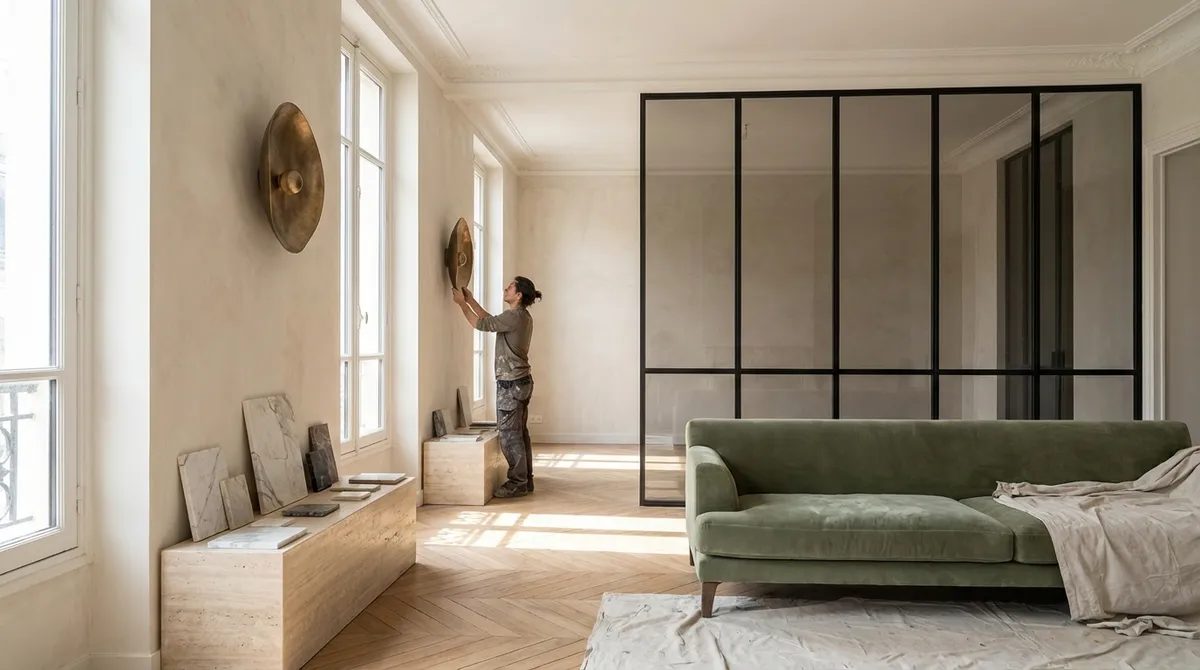
Honest finishes like unlacquered brass, solid wood, natural stone, and limewash plaster are returning to prominence, but with a more considered application. Renovators are using them strategically in high-touch areas where patina tells a story: handrails, door levers, kitchen pulls, stair treads, and fireplace surrounds. The goal is to cultivate surfaces that grow more beautiful with use, softening the divide between “newly renovated” and “lived in.”
This mindset also clarifies where engineered resilience is worth the investment—porcelain that mimics stone in a high-use bathroom, for example, or composite surfaces in utility zones. The sophistication lies in the contrast: pairing materials designed to stay visually stable with others selected precisely because they will evolve. Over time, the home reads less like a curated showroom and more like a finely edited personal archive.
Insight 3: Spatial Hierarchy That Privileges Daily Rituals
In many renovations, large budgets quietly disappear into “public” zones—impressive foyers, expansive living rooms, dramatic powder rooms. The emerging luxury, however, lies in prioritizing private rituals over public theater.
Refined renovators are recalibrating the hierarchy of space. A morning routine might warrant a generous, daylight-rich dressing area with thoughtfully organized storage, while the formal living room becomes more modest and flexible. Kitchen layouts are shifting from performative islands to task-specific zones tuned to how the household actually cooks, eats, and entertains.
This approach begins with mapping daily patterns: where you drop your bag, sort the mail, charge devices, groom, meditate, or decompress at night. Each micro-routine earns its own design solution—an integrated charging drawer at the entry, a concealed coffee station steps from the bedroom, a reading niche oriented to afternoon light. Instead of one or two “statement” areas, the whole home becomes quietly tailored to its inhabitants, making luxury feel less like a show and more like a lived-in privilege.
Insight 4: Layered Lighting as Architectural Storytelling
In elevated renovations, lighting is no longer a utility line-item; it is a primary design discipline. The most compelling homes treat light as a narrative—moving from crisp, functional brightness to atmospheric softness as the day progresses, and as one moves from public to private zones.
This means going beyond the basic formula of recessed cans plus pendants. Renovators are working with three to four distinct layers: concealed architectural lighting to define forms and volumes; targeted task lighting at counters, vanities, and desks; accent lighting to honor art, texture, or landscape; and selective decorative fixtures that function as sculptural elements rather than simple illumination.
The sophistication lies in restraint. Instead of over-lighting every surface, designers use shadow as deliberately as brightness to create depth, intimacy, and rhythm. Dimmers, warm-color-temperature LEDs, and scene controls allow spaces to transition fluidly from daytime clarity to evening softness. When executed well, even a modestly sized home feels multidimensional and composed, with every room revealing a different personality depending on the time of day.
Insight 5: Zoning for Emotional Acoustics, Not Just Sound Control
“Quiet” has become a luxury, but the most advanced renovations consider more than decibel reduction. They acknowledge emotional acoustics—how sound shapes mood, privacy, and a sense of refuge.
Thoughtful zoning begins with understanding where sound should travel and where it should be gently contained. Children’s rooms, media spaces, and kitchens benefit from selective isolation, while social areas near gardens or terraces may be designed to blend indoor conversation with the soft ambient sounds outdoors. Insulation, door quality, and floor assemblies are chosen not only for building code, but for how they make a bedroom feel cocooned, a study feel focused, or a primary suite feel distinctly separate from the rest of the house.
Materials play a crucial role: upholstery, rugs, drapery, and textured wall finishes subtly modulate reverberation. Built-in millwork can be detailed to absorb or diffuse sound rather than reflect it. Even appliance selection becomes part of this acoustic choreography. The final result is a home where serenity is not incidental—it is intentionally engineered, contributing to a sense of ease that most guests cannot identify, but nearly everyone feels.
Conclusion
For homeowners pursuing a truly elevated renovation, the frontier is no longer ornamental—it is experiential. Quiet technology that recedes, materials that embrace time, spaces organized around private rituals, lighting treated as narrative, and acoustics tuned to emotional comfort all signal a more mature understanding of luxury.
These are not flash-in-the-pan trends; they are design currents rooted in longevity, livability, and nuance. When embraced early in the planning process, they transform renovation from a singular project into a long-term framework for how you wish to live—today, and in the many subtle versions of “home” your life will require in the years ahead.
Sources
- Harvard Joint Center for Housing Studies – Improving America’s Housing – Research and data on renovation trends and homeowner investment priorities
- American Institute of Architects (AIA) – Home Design Trends Survey – Professional insights on emerging residential design patterns, including technology and layout preferences
- U.S. Department of Energy – Lighting Choices to Save You Money – Guidance on efficient lighting and the impact of different light sources in residential environments
- GSA – Sound Matters: How to Improve Acoustic Performance in Buildings – Official overview of acoustic strategies and materials relevant to high-performance interiors
- MIT School of Architecture and Planning – Materials and Design – Research hub offering publications and perspectives on material innovation and long-term performance in architecture and interiors
Key Takeaway
The most important thing to remember from this article is that this information can change how you think about Design Trends.